
How to Choose a Web Design Agency That Helps Your Business Grow
A web design agency should do more than make your site look good. For a local business, look for a partner that can build a mobile-friendly site, make it easy for customers to contact you, and connect the design to your SEO and marketing goals. Before you hire, ask who will do the work, what is included in the price, and how success will be measured after launch.
Design matters because visitors need to understand what you offer and trust what they see. This guide will help you compare agencies, spot gaps in a proposal, and choose a partner that fits your budget.
I’m Luke Wherry, Marketing Director at Three Ring Focus, which I founded in 2009. My work with local businesses has taught me what to look for in a web design agency: a clear plan for the site and the marketing that brings people to it.
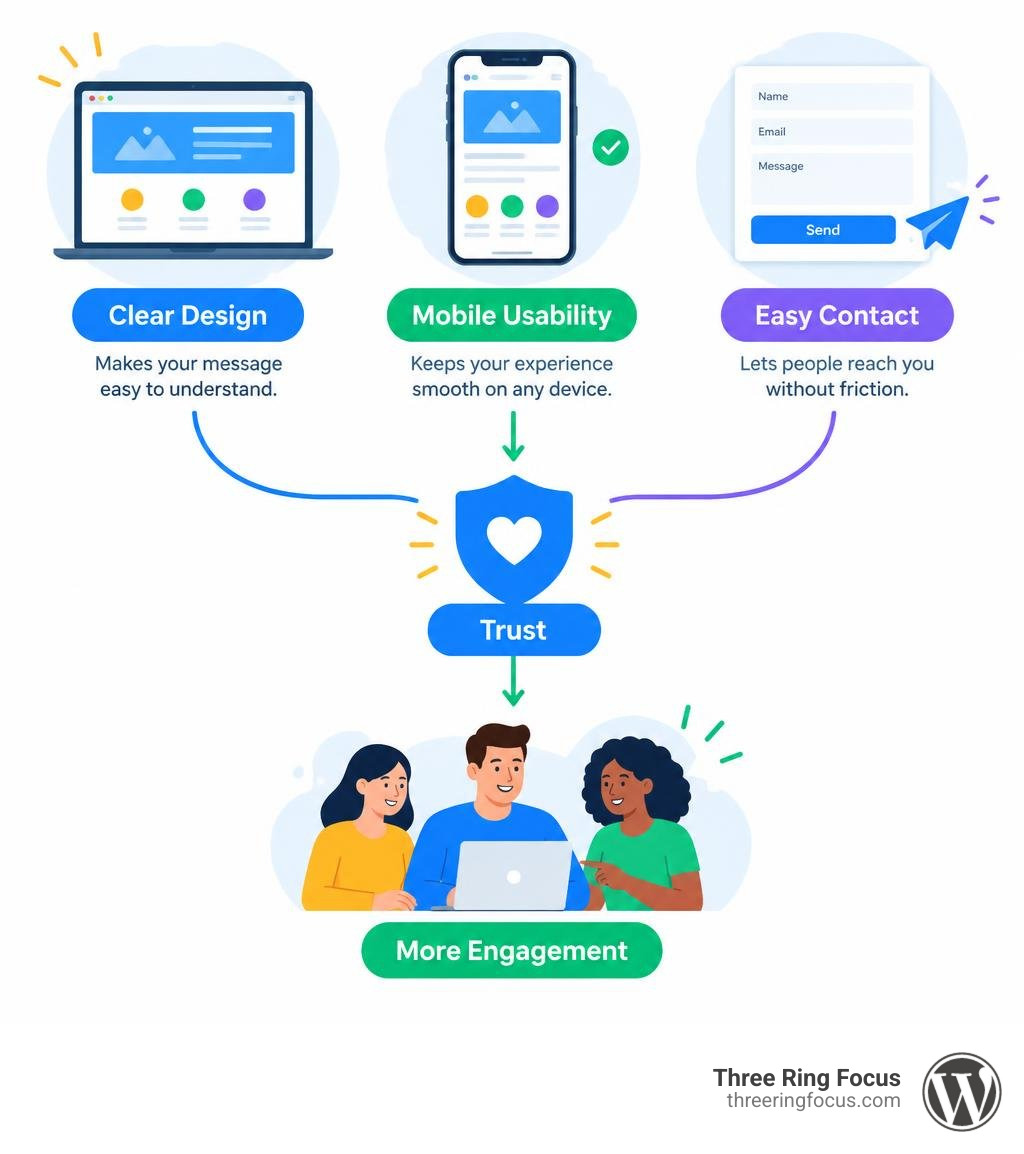
When evaluating digital touchpoints, the numbers paint a clear picture. Research shows that 94% of first impressions are design-related, and 75% of users judge a company’s credibility entirely on its visual presentation. Furthermore, 88% of online consumers will not return after a single poor experience, and 38% will bounce immediately if your layout feels dated or cluttered. Understanding these 5 web design statistics you should know highlights why treating design as an afterthought directly undermines your growth. In 2026, an intentional web presence is your most valuable asset.
Core Capabilities of a Full-Service Web Design Agency
A full-service digital team provides a unified growth engine rather than just visual styling. When business owners ask why you need a professional web designer, the answer lies in conversion architecture: bridging customer psychology, branding, search visibility, and engineering.
A modern website must guide users through an intentional journey. By mapping the full funnel, agencies craft pathways that take a user from discovery to inquiry or checkout without friction. This approach highlights the difference between a pretty website and a successful one: attractive visuals capture attention, but strategic structure drives measurable revenue.
Underpinning this visual strategy is strict technical performance. Every digital platform requires clean code, seamless cross-browser rendering, and dedicated responsive web design so user experiences remain flawless across desktops, tablets, and smartphones.
High-Converting Solutions for E-Commerce and B2B Brands
Different business models demand distinct conversion mechanics. E-commerce platforms require rapid browsing, clear product hierarchies, and frictionless checkouts. Modern DTC and retail brands rely on scalable architectures that support rapid growth, dynamic inventory, and lightning-fast checkout experiences. A specialized e-commerce design and development partner helps high-volume sellers streamline catalog navigation and eliminate friction points that hurt sales.
For B2B organizations, web platforms serve as digital sales reps. Rather than pushing an instant one-click purchase, B2B design focuses on:
- High-intent lead qualification funnels that segment prospects by industry, size, or need.
- Interactive product demos and downloadable resources that establish industry authority.
- Clear trust signals, compliance badges, and milestone markers that shorten long enterprise sales cycles.
- Dedicated, ultra-fast landing pages optimized for direct search and targeted PPC campaigns.
How a Web Design Agency Integrates Branding, UX/UI, and Technical Development
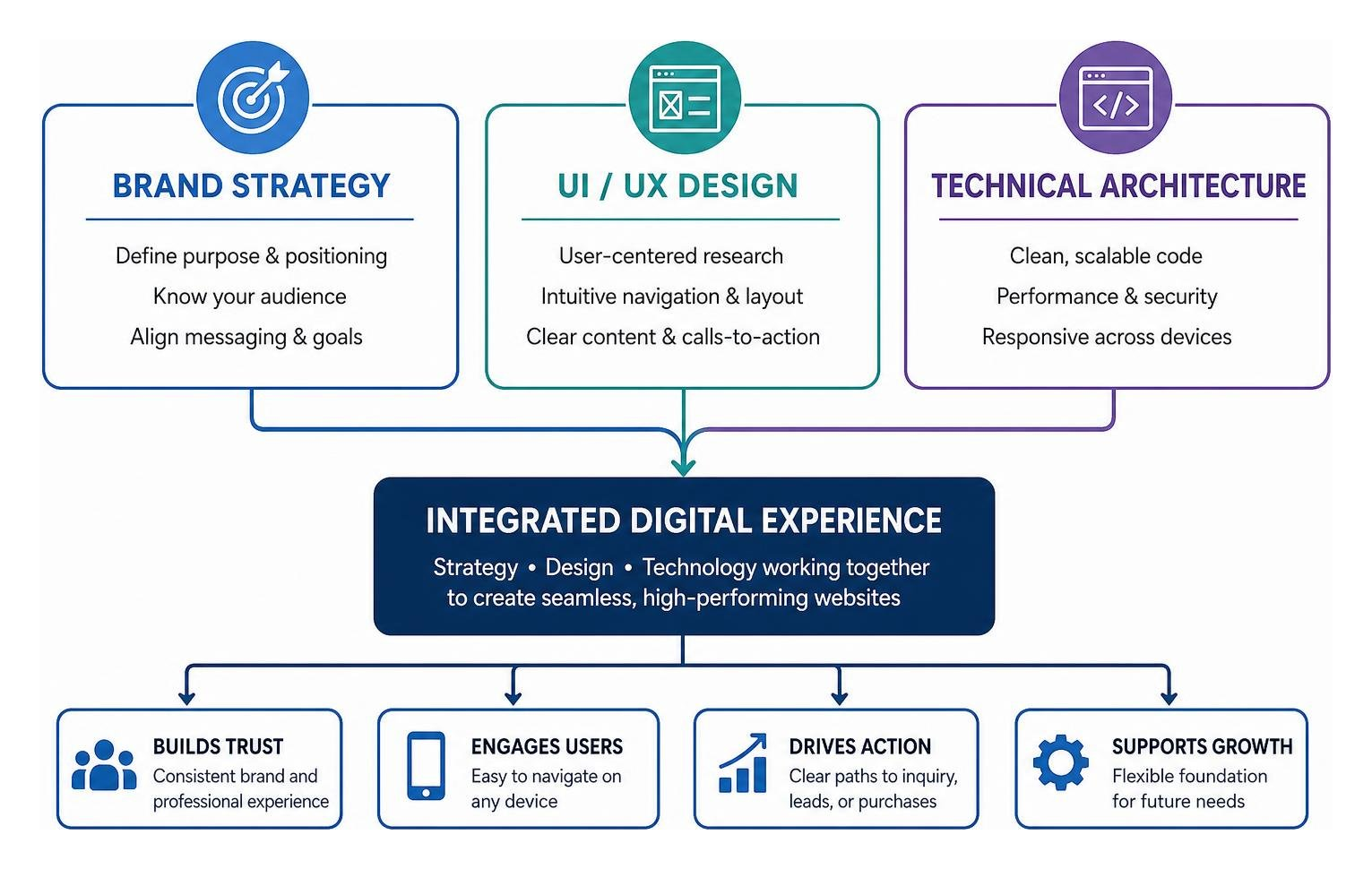
Digital design does not exist in a vacuum. Bringing an exceptional site to life requires unifying three core disciplines:
- Brand Identity Systems: Aligning typography hierarchies, color schemes, and narrative voice to reinforce brand authority across all customer touchpoints.
- Interactive UI/UX Design: Creating wireframes, user journeys, and prototypes that remove cognitive load and make site exploration intuitive.
- Robust Technical Development: Choosing the right underlying infrastructure—such as weighing CMS website design vs custom code—to ensure your site remains flexible, secure, and easily maintainable.

Specialized Agency vs. In-House Team: Strategic Value and AI Integration
Deciding between building an in-house design team or partnering with a dedicated agency comes down to resource allocation, specialized expertise, and overall agility. While an in-house designer knows your internal brand culture, an agency provides a cross-disciplinary team of art directors, conversion copywriters, full-stack engineers, and technical SEO specialists for a fraction of the overhead.
| Strategic Factor | Dedicated Web Design Agency | In-House Team Model |
|---|---|---|
| Financial Overhead | Predictable project or retainer billing; zero payroll tax or benefits costs. | High fixed salaries, ongoing recruitment fees, software licensing, and hardware costs. |
| Skill Breadth | Immediate access to UX researchers, visual designers, backend developers, and SEO strategists. | Often limited to one or two generalists handling multiple competing disciplines. |
| Pace of Innovation | Fast execution supported by cross-industry insights and battle-tested frameworks. | Can get bogged down by internal meetings, legacy processes, and company bottlenecks. |
| Solution Quality | Tailored strategic builds that avoid the pitfalls of custom web design vs online templates. | Frequently forced into rigid pre-made templates due to constrained dev bandwidth. |
Leveraging AI-Native Tools and Human-Led Creativity in 2026
Modern web design leverages AI workflows alongside seasoned human creative direction. Forward-thinking studios demonstrate how AI-native pipelines accelerate early ideation, generative asset exploration, and customer research sprints.
Agencies use these advanced systems to:
- Generate modular layout variations and wireframes rapidly during discovery.
- Automate repetitive code scaffolding and run automated browser tests.
- Deliver personalized dynamic content experiences based on user search behavior.
However, software cannot replace strategic brand storytelling, conversion empathy, and human judgment. The most effective agencies use intelligent tools to handle tedious manual tasks, freeing up experienced designers and engineers to focus on custom user journeys and high-impact branding.
Navigating the Development Lifecycle and Measuring Project Success
A structured engagement prevents unexpected scope expansion and keeps project launches on schedule. Professional agencies run clear, collaborative production milestones:
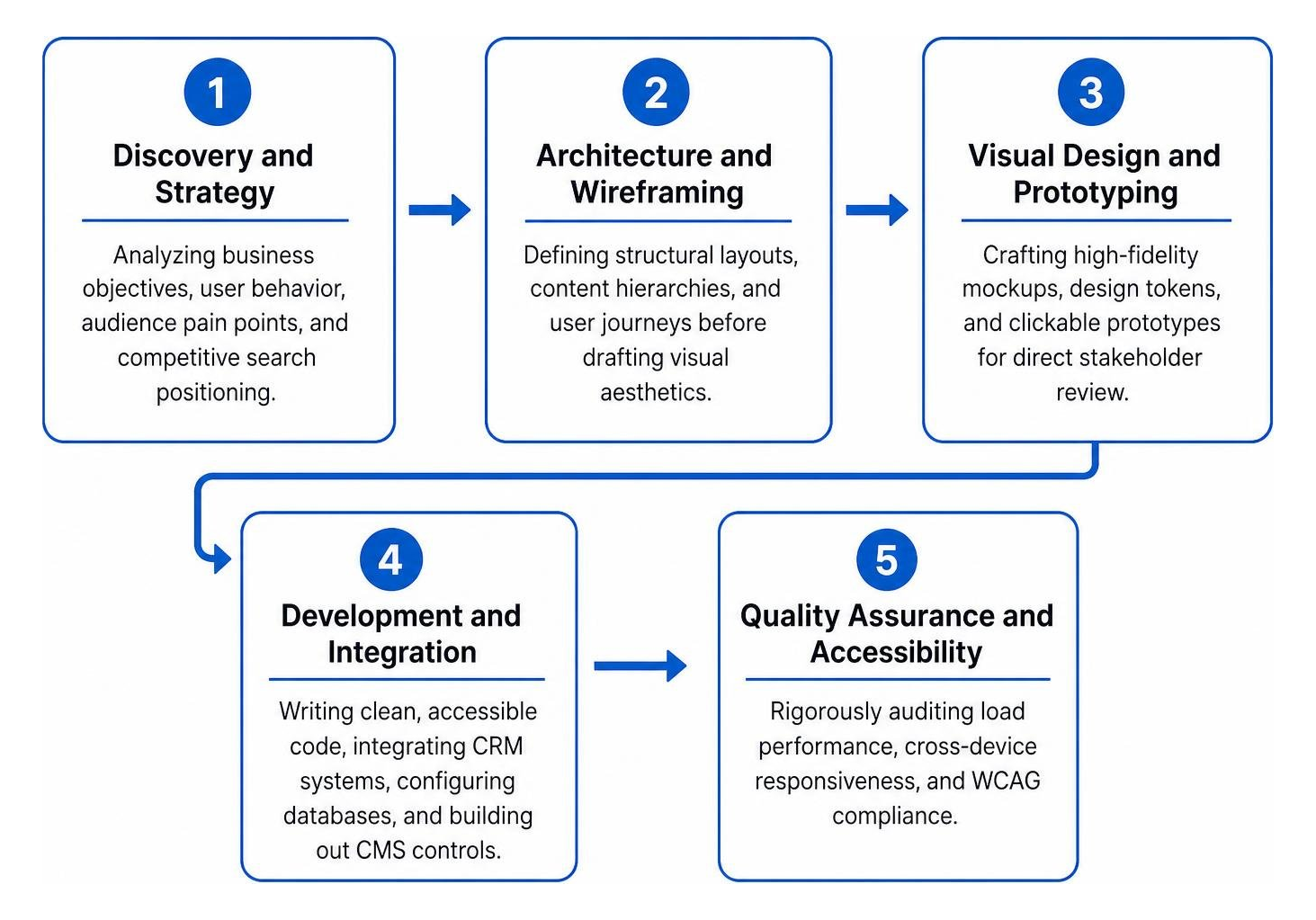
- Discovery and Strategy: Analyzing business objectives, user behavior, audience pain points, and competitive search positioning.
- Architecture and Wireframing: Defining structural layouts, content hierarchies, and user journeys before drafting visual aesthetics.
- Visual Design and Prototyping: Crafting high-fidelity mockups, design tokens, and clickable prototypes for direct stakeholder review.
- Development and Integration: Writing clean, accessible code, integrating CRM systems, configuring databases, and building out CMS controls.
- Quality Assurance and Accessibility: Rigorously auditing load performance, cross-device responsiveness, and WCAG compliance. Prioritizing web accessibility and why it’s important ensures your digital storefront serves every user while reducing legal risks.
- Deployment and Validation: Executing a secure launch checklist, setting up automated backups, configuring 301 redirects, and validating live analytics tracking.
Key Factors to Evaluate When Hiring a Web Design Agency
When vetting potential agency partners, look past surface aesthetics and review their underlying strategy:
- Strategic Discovery: Do they ask pointed questions about your customer lifetime value, lead pipelines, and conversion bottlenecks, or do they jump straight into visual styling?
- Technical Portfolio Depth: Can they show documented client milestones, technical case studies, and scalable enterprise builds?
- Local and Organic Search Expertise: Do they demonstrate a proven track record of building a powerful local SEO website design that systematically captures qualified organic search traffic?
- Clear Communication Protocols: Do they provide dedicated project managers, shared collaboration boards, and clear feedback windows?
Measuring ROI and Post-Launch Performance Metrics
A strategic redesign delivers compounding returns across your marketing mix. Design-driven companies consistently outperform broader market benchmarks, with web design investments driving an average return of 2,200%.

To verify the impact of your new digital experience, monitor these core performance metrics:
- Bounce Rate and Engagement Depth: Tracking engagement to see if clear visual hierarchies keep users exploring product and service pages.
- Conversion Velocity: Measuring the speed and rate at which organic visitors submit inquiries, book appointments, or complete purchases.
- Page Load Metrics and Core Web Vitals: Keeping sites running fast. Websites loading in 2 seconds or less experience a 9% higher bounce rate than those loading in under 1 second, making improving your website speed essential for conversions and search rankings.
- Mobile Interaction Quality: Ensuring smartphone visitors experience fast checkouts and easy navigation, especially since why mobile-friendly websites are non-negotiable is proven by the fact that 57% of users refuse to recommend a business with an unoptimized mobile site.
Overcoming Collaboration Pitfalls and Ensuring Long-Term Growth
Web development challenges usually stem from misaligned expectations, ambiguous revision scopes, or neglected technical upkeep. Prevent scope creep by requiring a detailed statement of work that outlines specific page templates, third-party integrations, and milestone sign-offs.
A website is a living digital asset, not a one-and-done project. Without ongoing care, software dependencies fall behind, security vulnerabilities emerge, and conversion rates drop. Understanding website maintenance and why you need it protects your digital investment and keeps your platform running smoothly.
Frequently Asked Questions About Web Design Partnerships
How long does a custom agency web design project typically take from start to finish?
A comprehensive custom website design build typically spans between 6 to 14 weeks. This timeline accounts for discovery, wireframing, custom visual design, responsive frontend coding, CMS configuration, QA testing, and client review cycles. More complex web applications with custom API endpoints or large e-commerce catalogs may take 16 to 24 weeks.
How do I determine whether my business needs a minor refresh or a full site overhaul?
If your underlying content management system is modern and your conversion pathways work well, minor styling updates and speed optimizations may be enough. However, reviewing these 5 signs your website needs a redesign will help you identify when legacy code bottlenecks, high bounce rates, poor mobile usability, or outdated branding require a full architectural rebuild.
What pricing models do modern web design agencies use?
Agencies generally structure pricing around:
- Fixed-Scope Projects: A defined investment covering discovery, design, development, and launch milestones with clear deliverables.
- Dedicated Agile Retainers: Monthly sprint allocations used by growing brands for continuous feature rollouts and ongoing conversion rate optimization.
- Performance/Value-Based Pricing: Engagements aligned with specific business outcomes, lead targets, or enterprise milestones.
Conclusion
Your website is the foundation of your digital marketing strategy. Choosing the right design partner means finding a team that unifies conversion-focused design, technical search optimization, and reliable ongoing support.
At Three Ring Focus, we build results-driven digital platforms that help businesses stand out and grow. Whether you are launching an e-commerce platform, rebuilding an enterprise site, or expanding your local footprint, our team provides the design expertise, custom development, and integrated digital marketing needed to achieve sustainable online success.