Core Foundations of Local SEO Website Design
Building a powerful local SEO website design requires structured NAP (Name, Address, Phone number) consistency, dedicated geo-targeted landing pages, LocalBusiness structured data markup, mobile-first responsiveness, and fast-loading technical architecture. These core components align your website with search engine proximity algorithms and high-intent local consumer queries to secure top placements in local pack and organic search results.
Local search marketing differs from traditional organic SEO primarily through geographic intent and proximity algorithms. While traditional SEO focuses on building national or global authority around broad topical keywords, local SEO narrows the focus to capture high-intent users within specific geographic boundaries. Over 50% of all local searches end with an offline or online purchase, making local search visibility directly tied to immediate revenue.
A website designed specifically for local SEO combines technical performance with localized user experience (UX) signals. This requires establishing strict consistency in your NAP details across every page of your site, matching your external directory profiles verbatim. Inconsistent phone formatting, differing suite numbers, or slight variations in business naming can confuse search crawlers and divide page authority.
Beyond basic contact data, modern local architecture relies on structured data markup. Implementing LocalBusiness schema (or more granular types like PlumbingService, LegalService, or MedicalClinic) allows search engine crawlers to parse geographic coordinates, operating hours, accepted payment methods, and service areas accurately. For a broader overview of how structured data fits into search visibility, Google’s Search Central documentation on structured data explains how schema helps search engines understand page content and display rich results.
Architectural Pillars of a Local SEO Website Design
Building an engine that captures localized traffic requires five architectural pillars:
- Geo-Targeted Landing Pages: Dedicated URLs targeting distinct cities, towns, and neighborhoods rather than stuffing multiple locations onto a single homepage.
- Mobile-First Responsiveness: Immediate touch targets, sticky navigation, and tap-to-call functionality designed for on-the-go consumers searching on mobile devices.
- Page Speed Optimization: Lean codebases that load within sub-second thresholds to minimize bounce rates and maximize Google Core Web Vitals scores.
- Localized Metadata: Title tags, meta descriptions, image ALT text, and header tags systematically optimized with primary keywords and location modifiers.
- Crawlable Navigation: Clean internal linking structures that distribute page authority from high-traffic pages directly down to sub-market location hubs.
Integrating Google Business Profile and Local Directory Citations
Your website does not exist in a vacuum; it acts as the primary anchor for an ecosystem of off-page directory signals. Google Business Profile (GBP) remains the single most impactful driver of local pack rankings, complemented by Bing Places and Apple Maps.

A comprehensive citation strategy requires distributing verified business data across major data aggregators (such as Data Axle, Localeze, and Foursquare) and over 100+ high-authority online directories. Submitting to these platforms builds citation volume, reinforces geographic relevance, and eliminates duplicate or conflicting NAP records that dilute local search rankings. Consistent citations also strengthen the trust signals that search engines use when evaluating local business authority, which is why citation management should be treated as an ongoing process rather than a one-time setup task.
Expanding Market Reach Beyond Immediate Geographic Boundaries
Many local businesses find themselves trapped in a 2 to 5-mile ranking bubble immediately surrounding their physical office. A strategic website design allows companies to expand their service radius outward to 20, 30, or even 40 miles, significantly growing total addressable market share.
To manage and evaluate multi-location growth, businesses often leverage structured local optimization packages that scale with their regional ambitions:
| Feature & Capability | Local SEO GOLD Tier | Local SEO PLATINUM Tier |
|---|---|---|
| Directory Submissions | 100+ Primary Local Directories | 100+ Directories + Tier-1 Data Aggregators |
| Search Engine Claiming | Google Business Profile & Bing Places | GBP, Bing, Apple Maps, Voice Search Networks |
| Citation Cleanup | Basic Duplicate Detection | Advanced Citation Audit & Active Suppression |
| Review Management | Centralized Review Monitoring | Automated Review Velocity & Multi-Platform Tools |
| Visibility Reporting | Monthly Regional Radius Reports | Dynamic Local SEO Grid System Micro-Tracking |
| Target Footprint | Single City / Core Service Radius | Multi-Location / Regional Expansion (40+ Miles) |
This tiered structure gives business owners a clear roadmap for deciding how aggressively to pursue regional growth. A single-location service business just starting with local search may find the Gold tier sufficient for establishing a strong foundation, while multi-location brands competing across several counties typically need the deeper citation coverage, review velocity tools, and granular geo-grid reporting included in the Platinum tier to maintain visibility across every micro-market they serve.
Scaling from Neighborhoods to Regional Service Radii
To scale beyond your immediate municipality without opening new physical storefronts, your website must implement localized content siloing. This involves creating service-area business (SAB) structures featuring individualized sub-market landing pages.
Each landing page must feature original content, genuine case studies, customer testimonials from that specific locale, and localized project descriptions rather than duplicate boilerplate copy. Incorporating regional references, local driving directions, and specific neighborhood project galleries signals authentic community presence to search crawlers. This approach builds topical depth for each neighborhood while reinforcing the geographic relevance signals that search engines use to determine which businesses appear in local pack results for surrounding communities.
Technical Execution and Implementation Strategies
Executing a localized design requires reinforcing on-page location signals directly within your design elements, code structures, and conversion paths.

Essential technical components include:
- Embedded Interactive Maps: Secure, responsive Google Maps API embeds that pinpoint your office location or outline verified service perimeters.
- Dynamic Click-to-Call Buttons: Prominently placed, mobile-optimized phone buttons that trigger direct calls and pass conversion tracking events to analytics software.
- Local Review Schema: Aggregate rating schema embedded directly into landing pages to generate rich snippet star ratings in search engine results pages.
- Localized Media: WebP-formatted project photography tagged with local descriptive naming conventions and relevant image metadata.
Strategic Best Practices for Local SEO Website Design
- Embed Dynamic Review Feeds: Stream verified, real-time Google reviews directly onto relevant service pages using API-driven review widgets to build immediate buyer trust.
- Implement Geo-Sitemaps: Supplement your XML sitemap with explicit geo-location markup to accelerate search engine discovery of newly published neighborhood pages.
- Create Frictionless Form Experiences: Keep conversion forms short, asking only for essential details (name, phone, service needed) to maximize mobile conversion rates.
- Maintain Clear Content Silos: Organize internal links logically (e.g.,
/locations/myrtle-beach/commercial-roofing/) to establish clean topical and geographic hierarchies.
Tracking Metrics and Measuring Local Visibility
Tracking local search performance requires looking beyond traditional organic keyword positions to monitor multi-point geographic exposure.
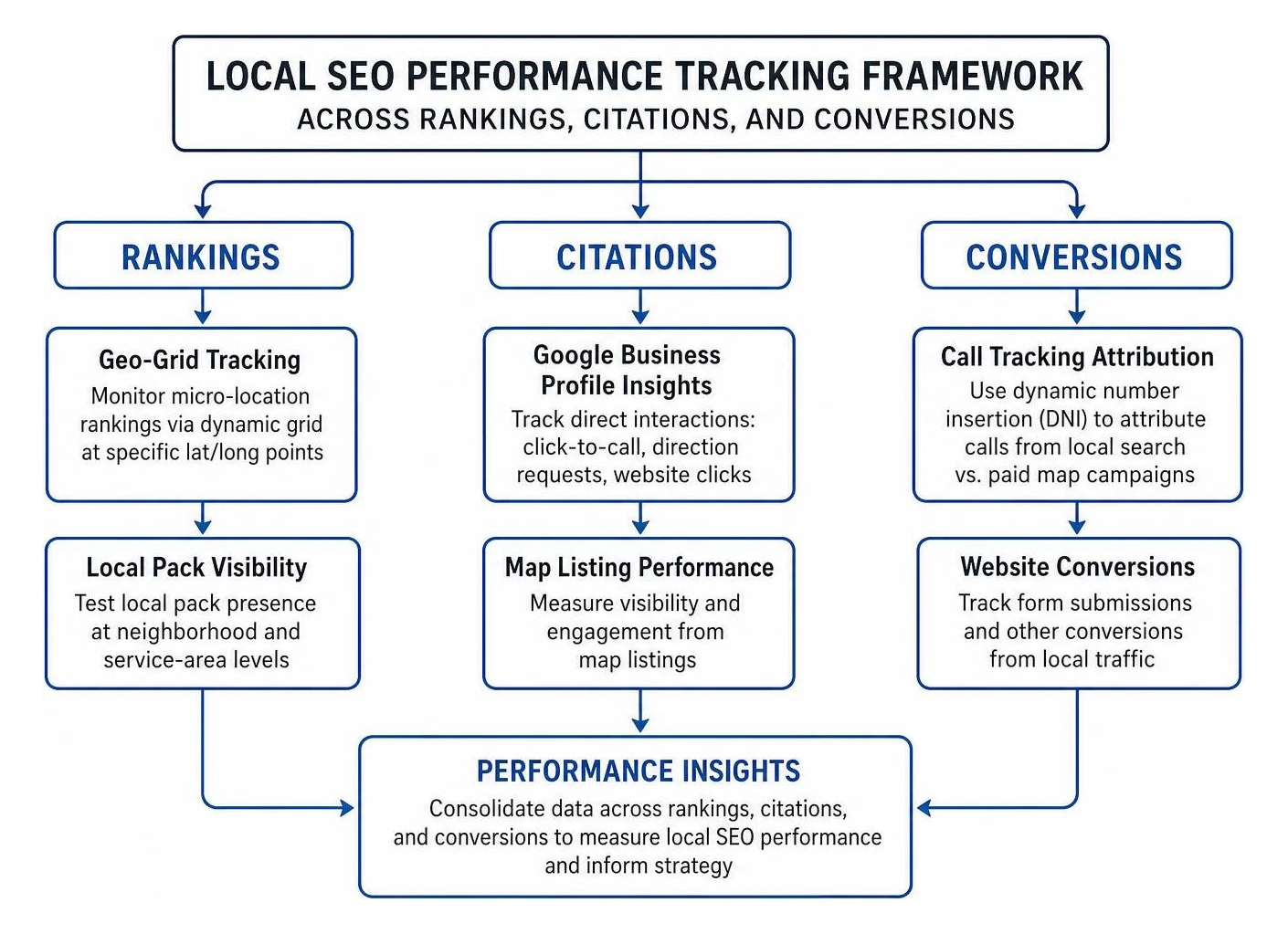
Key local performance metrics include:
- Geo-Grid Tracking: Monitoring micro-location rankings via dynamic grid systems that test local pack visibility at specific latitude and longitude points.
- Google Business Profile Insights: Tracking direct interactions, including click-to-call volume, direction requests, and website clicks originating from map listings.
- Call Tracking Attribution: Using dynamic number insertion (DNI) to distinguish calls generated from organic local search versus paid map campaigns.
- Local Landing Page Conversion Rates: Measuring form submissions and inbound calls per distinct geographic landing page.
- Citation Health & Indexing: Regularly auditing citation consistency and tracking how many secondary directory links are indexed by search engines.
Frequently Asked Questions About Local Search Web Design
How does local SEO website design differ from standard web design?
Local SEO website design specifically builds pages around local search intent, integrating structured NAP data, location-specific schema markups, interactive map components, and dedicated neighborhood landing pages that standard websites omit.
What is the difference between Gold and Platinum local SEO packages?
Gold packages focus on foundational listing health, optimizing core engines like Google and Bing while submitting to major directories. Platinum packages expand coverage to major data aggregators, deploy dynamic geo-grid tracking, and introduce active review velocity generation to push visibility across broad regional territories.
How quickly can an optimized local website expand business market reach?
With accurate technical architecture, consistent directory syndication, and localized landing pages, businesses typically observe initial local pack movement within 60 to 90 days, with full regional expansion (expanding from a 5-mile to a 40-mile radius) compounding over 6 to 12 months.
Conclusion
A well-structured local website serves as the central anchor for your entire digital footprint. At Three Ring Focus, we deliver results-driven web design, SEO, and multi-channel marketing campaigns that help local businesses claim top rankings across their primary and secondary target markets.
To build an authoritative brand presence that wins both online and offline, combine strong search performance with cohesive real-world assets through the appeal of print design in a digital world. Contact our team today to begin engineering your local search growth strategy.