
How to Start Ecommerce Site Development
Start with the way your customers shop. Map the path from finding a product to placing an order. Then choose a platform that fits your budget, catalog, and plans for growth. Build mobile-friendly product pages, use a trusted payment provider, connect inventory, and test the full checkout before launch.
A store also needs to be easy to find and easy to improve. Set up clear product URLs, fast-loading images, and analytics from the start. After launch, watch where shoppers leave and fix the biggest problems first.
I’m Luke Wherry, Marketing Director at Three Ring Focus. For more than 17 years, I’ve worked on SEO-friendly websites and connected marketing campaigns; in this guide, I’ll show you how to apply that approach to ecommerce site development.
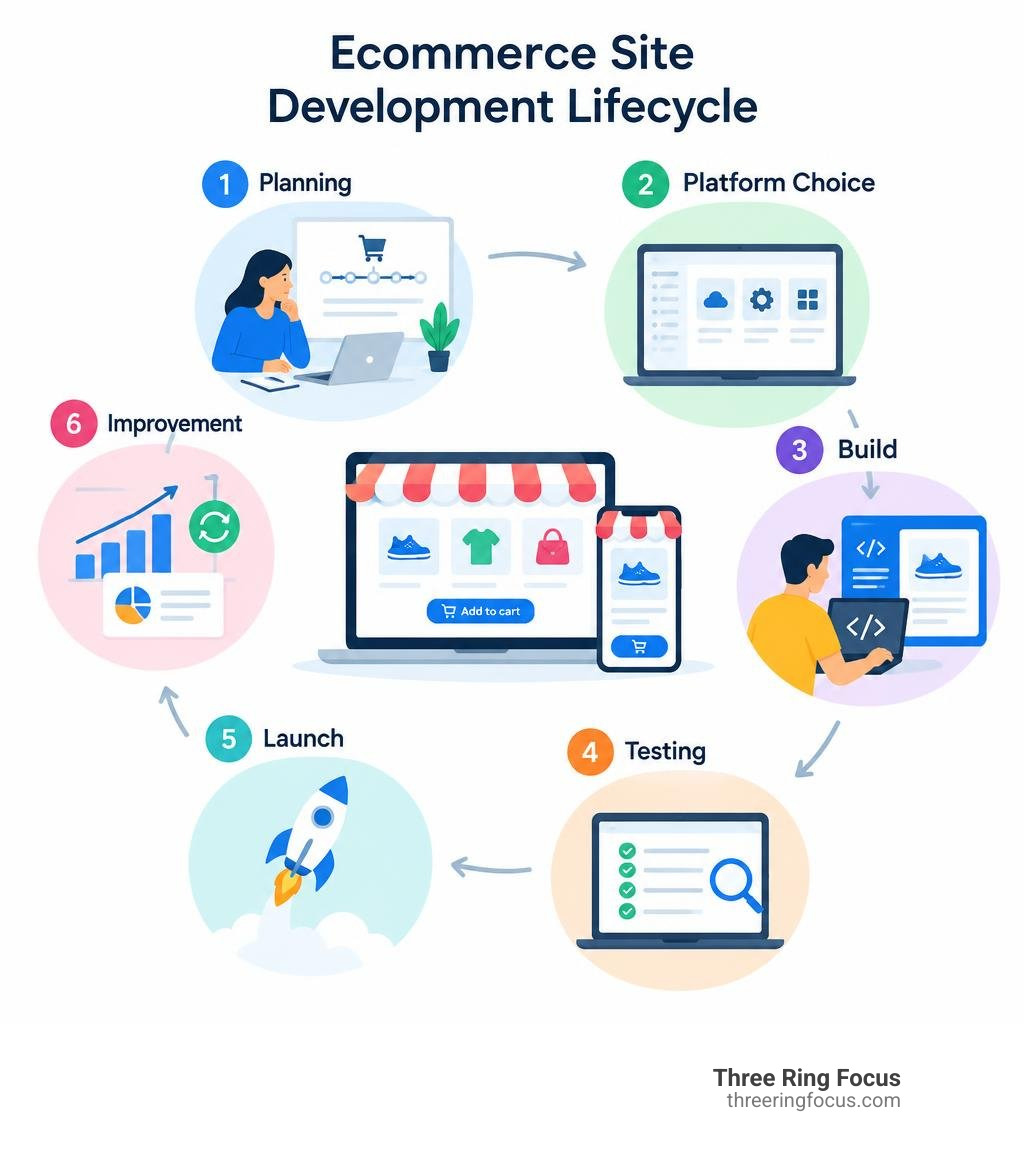
Industry forecasts show that ecommerce will capture roughly 22.5% of global retail sales by 2028 (up from 20.5% in 2025). At the same time, mobile devices generate roughly 70% of total online sales. When traffic spikes, poorly built websites collapse, lose checkout data, or slow down just when buyers are ready to pay.
Building an online store that scales requires treated architectural decisions as foundational priorities, not afterthoughts. Here is our step-by-step technical blueprint for creating high-performing, high-margin ecommerce stores.
Platform Selection and Architecture for Scalable Online Stores
The architecture you pick on day one determines your development velocity, operating expenses, and technical overhead for years.
Choosing the Right Stack for Ecommerce Site Development
When scoping an ecommerce build, we evaluate platforms based on catalog size, technical complexity, internal developer resources, and long-term total cost of ownership (TCO). Rather than defaulting to a one-size-fits-all tool, we balance out-of-the-box speed against architectural flexibility.
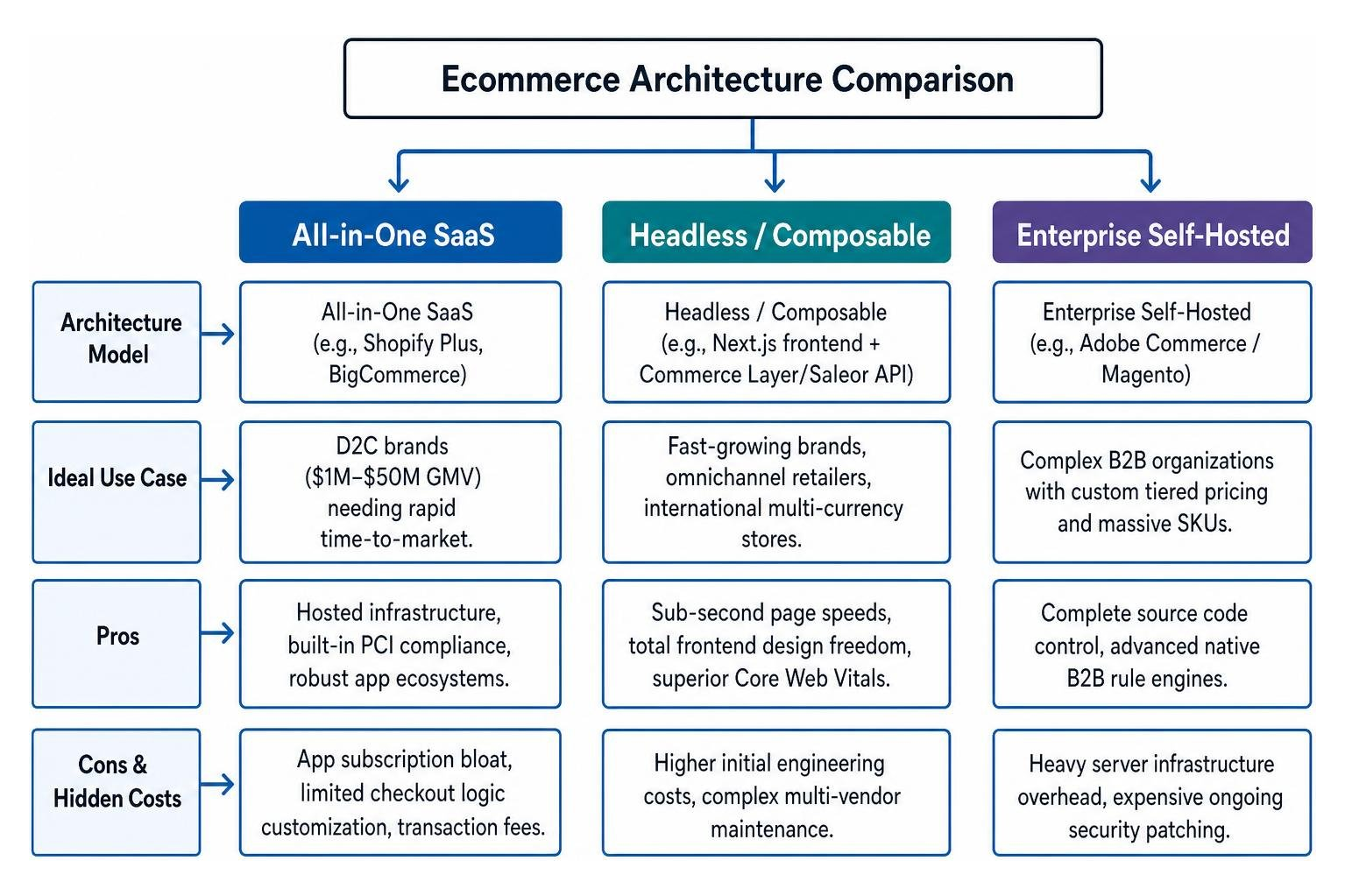
| Architecture Model | Ideal Use Case | Pros | Cons & Hidden Costs |
|---|---|---|---|
| All-in-One SaaS (e.g., Shopify Plus, BigCommerce) | D2C brands ($1M–$50M GMV) needing rapid time-to-market. | Hosted infrastructure, built-in PCI compliance, robust app ecosystems. | App subscription bloat, limited checkout logic customization, transaction fees. |
| Headless / Composable (e.g., Next.js frontend + Commerce Layer/Saleor API) | Fast-growing brands, omnichannel retailers, international multi-currency stores. | Sub-second page speeds, total frontend design freedom, superior Core Web Vitals. | Higher initial engineering costs, complex multi-vendor maintenance. |
| Enterprise Self-Hosted (e.g., Adobe Commerce / Magento) | Complex B2B organizations with custom tiered pricing and massive SKUs. | Complete source code control, advanced native B2B rule engines. | Heavy server infrastructure overhead, expensive ongoing security patching. |
| Custom Full-Stack (e.g., React/Next.js, Node.js, PostgreSQL) | Unique business models, proprietary multi-vendor marketplaces. | Zero platform licensing constraints, tailor-made checkout and logic. | Long initial build cycles, in-house maintenance accountability. |
For many fast-moving brands, a tailored ecommerce development engagement helps clarify whether a standard platform or a composable setup makes the most business sense.
Balancing Custom Features with Off-the-Shelf Modularity
A common mistake is trying to custom-code features that standard platforms already handle well. Why hand-code basic transactional email delivery or standard discount codes when proven APIs exist?
We prioritize custom development where it directly impacts your competitive advantage:
- Proprietary 3D product visualizers and bundle configurators
- Dynamic B2B customer-specific tiered pricing models
- Multi-warehouse inventory routing logic
For commodity features (such as user authentication, tax calculation, and basic customer reviews), we integrate trusted off-the-shelf APIs. This approach protects engineering budgets while keeping your tech stack lean.
Technical Engineering: Integrations, Catalogs, and Marketplaces
Your storefront is only as reliable as the backend systems running beneath it.
Integrating ERP, CRM, and Payment Orchestration
Real-time inventory synchronization across Enterprise Resource Planning (ERP) platforms (like NetSuite, SAP, or Microsoft Dynamics) and Customer Relationship Management (CRM) tools requires rock-solid data integrity.
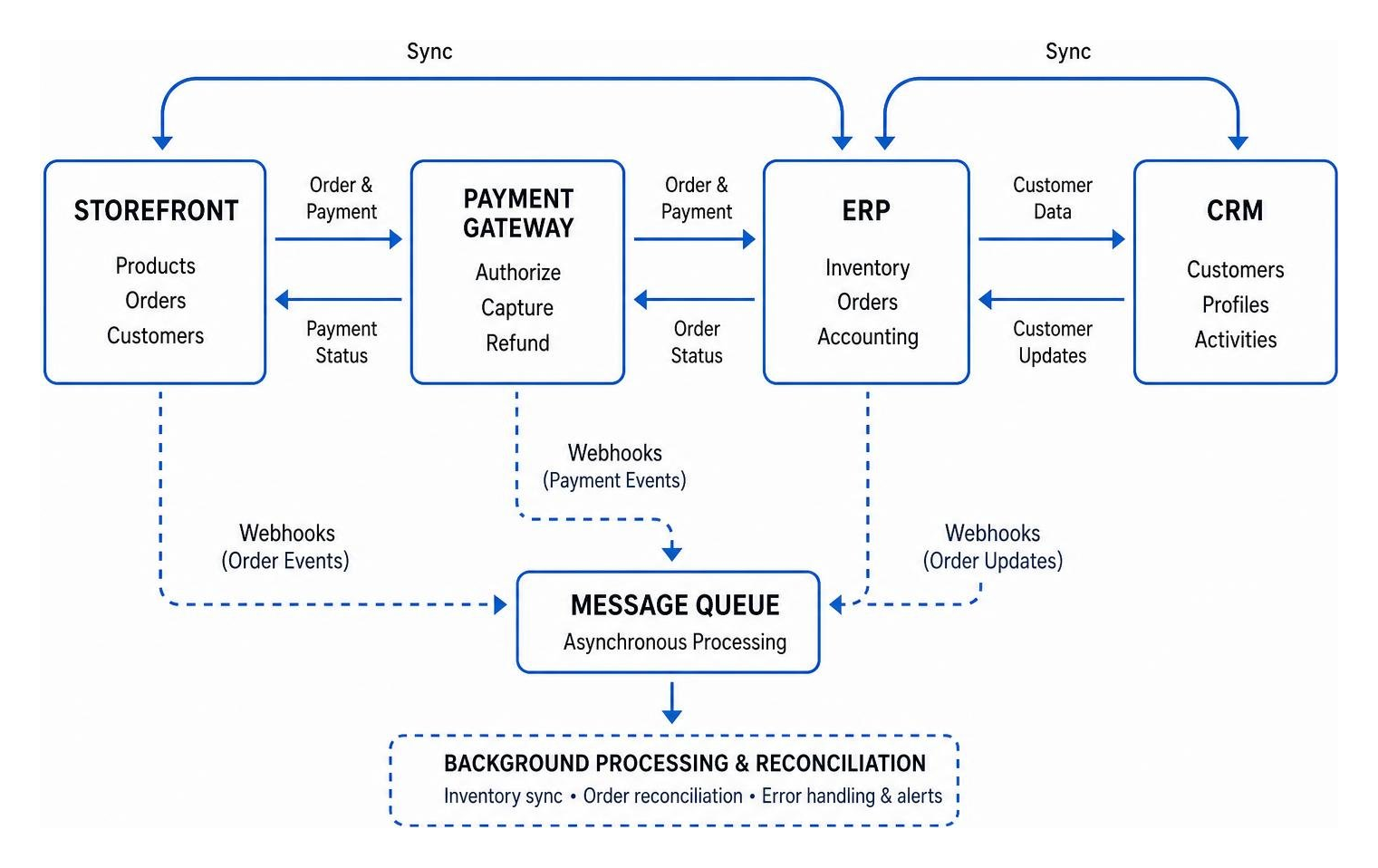
To prevent dropped orders during high-traffic events, we apply strict integration rules:
- Idempotent API Endpoints: Every checkout transaction uses unique idempotency keys so that network retries never double-bill a customer.
- Asynchronous Webhook Processing: Webhooks from payment processors (Stripe, Adyen, PayPal) are placed into message queues (such as AWS SQS or Redis) and processed asynchronously.
- Reconciliation & Error Fallbacks: Scheduled cron routines reconcile captured bank charges against ERP order logs to flag discrepancies automatically.
If your team is working on operational margins, reviewing architectures built for custom online store development can provide deep insights into building resilient data pipelines.
Managing Large Catalogs and Faceted Search Navigation
When a store carries tens of thousands of SKUs, standard SQL database queries quickly become performance bottlenecks.
- Dedicated Search Engines: We integrate search engines like Elasticsearch or Algolia to power faceted search (filtering by size, color, brand, and price) with sub-50ms response times.
- SEO Crawl Optimization: Faceted filters can generate millions of thin, duplicate URLs. We implement canonical tags, clean URL parameter handling, and
robots.txtrules to direct search engines toward valuable category landing pages without wasting crawl budgets. - Multi-Warehouse Routing: Inventory systems check localized stock levels in real time, routing order fulfillment to the closest warehouse to cut shipping costs and delivery times.
Multi-Vendor Marketplaces and Complex Commerce Models
Building a marketplace platform introduces multi-sided operational challenges:
- Multi-Tenant Schemas: We maintain vendor data isolation at the database layer to secure proprietary catalog and customer metrics.
- Split Payments & Escrow: Integrating platforms like Stripe Connect allows buyers to purchase items from three distinct vendors in one checkout flow, splitting payouts and commissions automatically.
- Vendor Portals & Dispute Workflows: Self-service portals allow vendors to update product listings, manage shipping labels, and resolve customer support tickets directly.
For businesses looking to maximize operational efficiency, learning more about ecommerce development workflows can shed light on structuring clean merchant payout workflows.
Performance Engineering and Conversion Rate Optimization in Ecommerce Site Development
If your site takes more than three seconds to load, your conversion rate will drop. Performance is directly tied to your bottom line.

Mobile-First Design and Progressive Web App Capabilities
Because mobile devices drive roughly 70% of online revenue, desktop-first design is a thing of the past. We design for thumbs first:
- Progressive Web App (PWA) Tooling: Service workers cache core UI assets locally, delivering near-instant page reloads even on spotty cellular connections.
- Biometric & One-Tap Checkout: Integrating Apple Pay, Google Pay, and Shop Pay removes tedious credit card typing, boosting mobile conversions significantly.
- Touch-Friendly Controls: Generous tap targets (minimum 48x48px) and smooth sheet modals replace clunky dropdowns on product filtering screens.
Streamlining Checkout and UX in Ecommerce Site Development
A fast checkout flow removes cognitive friction at the finish line:
- Enforce Core Web Vitals Budgets: Set strict performance gates within your continuous integration (CI) pipeline. Keep Largest Contentful Paint (LCP) under 1.5s and Cumulative Layout Shift (CLS) near zero by serving modern WebP/AVIF images and inlining critical CSS.
- Single-Page & Guest Checkout: Never force account creation before purchase. Provide guest checkout by default and offer single-click account creation after payment confirmation.
- Address Auto-Complete: Use the Google Places API or address validation services to reduce typing errors and prevent failed delivery fees.
If you are revamping legacy touchpoints, working with specialized ecommerce web development teams can help you overhaul cluttered checkout flows.
Security, Compliance, and Zero-Downtime Migration Protocols
A single data leak or compliance lawsuit can damage your brand overnight. Security and accessibility must be built into your code from day one.

Payment Security, PCI-DSS, and WCAG Accessibility
- PCI-DSS Compliance: Keep sensitive card data out of your server scope. Use hosted fields, tokenization, and modern payment libraries so card numbers never hit your database.
- WCAG 2.2 AA Compliance: Thousands of ADA accessibility lawsuits hit ecommerce stores every year. We test with tools like
axe-core, check color contrast ratios, ensure full keyboard navigability, and include descriptive alt attributes on all product media. - Data Privacy (GDPR & CCPA): Build transparent consent banners, maintain clear cookie controls, and provide self-service tools for customer data deletion requests.
Risk-Free Platform Migration and Data Integrity
Replatforming without losing historical SEO rankings or order history requires a disciplined migration runbook:
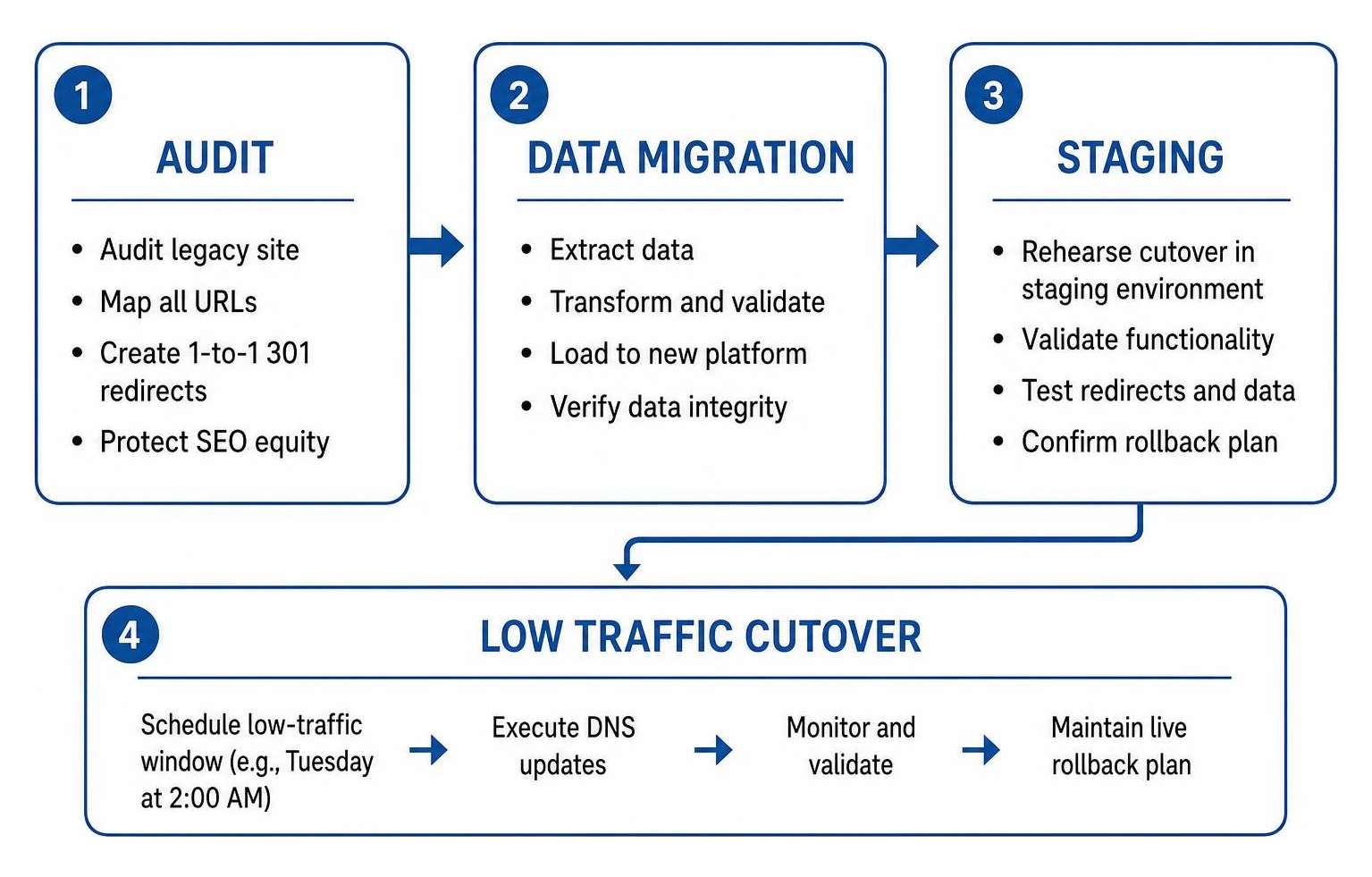
- URL Mapping & 301 Redirects: Audit every legacy URL. Create 1-to-1 redirect maps to matching URLs on the new platform to protect your backlink equity and organic traffic.
- ETL Pipelines for Data Integrity: Extract, transform, and load historical customer records, order histories, and product variations using automated validation scripts that flag schema errors before launch.
- Staging & Cutover: Rehearse the cutover in a staging environment. Execute DNS updates during low-traffic windows (such as Tuesday at 2:00 AM) while maintaining live rollback contingencies.
For merchants scaling their digital presence, aligning store architecture with your organic acquisition strategy is essential. Discover how to master local business marketing to drive steady traffic straight to your newly optimized product pages.
Post-Launch Measurement: KPIs and Continuous Optimization
Launching your ecommerce store is just the beginning. Real growth comes from measuring customer behavior and iterating systematically.
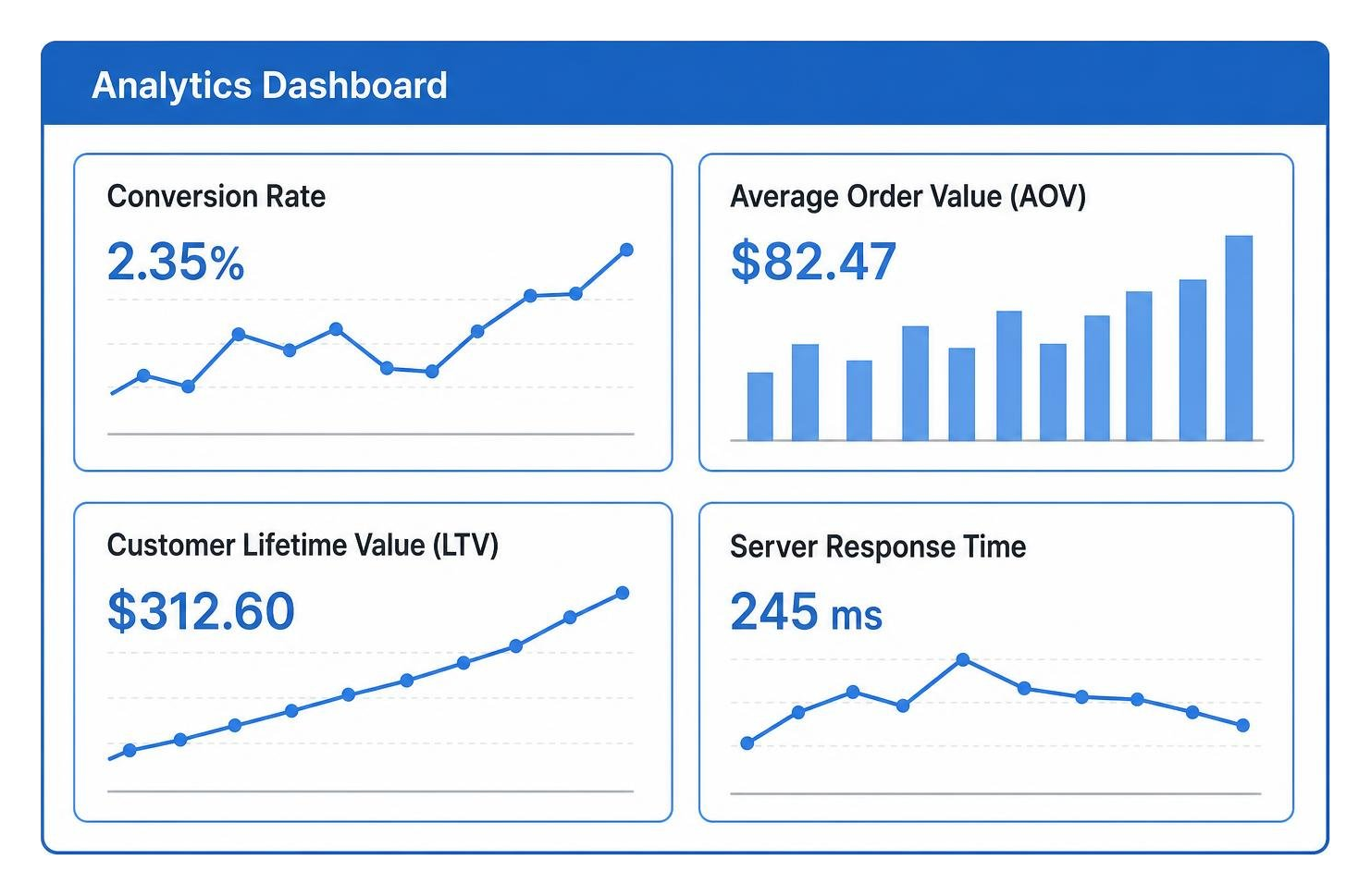
Key Metrics to Track Post-Launch
- Conversion Rate (CR) by Device: Compare mobile vs. desktop conversions to spot responsive layout bugs.
- Average Order Value (AOV): Test post-purchase upsells, tiered volume discounts, and free shipping thresholds.
- Customer Lifetime Value (LTV) & Churn: Track repeat purchase rates, subscription renewals, and retention curves.
- Cart Abandonment Funnel Drop-offs: Identify whether customers leave at shipping calculation, payment selection, or initial cart review.
5x Peak-Season Load Testing
Before major sales events like Black Friday, we run automated load tests simulating 5x your anticipated peak traffic. We test server auto-scaling, verify CDN caching hit ratios, and practice our war-room protocol so peak shopping periods run smoothly.
Teams looking into customized tech stacks can review modern patterns in custom ecommerce architecture to see how modular platforms handle large traffic surges.
Frequently Asked Questions About Ecommerce Site Development
How long does an enterprise ecommerce development project take?
Timelines depend on project scope and custom integration needs:
- Lean MVP / Standard SaaS Build: 8 to 12 weeks.
- Mid-Market Headless / Multi-System Integration: 3 to 5 months.
- Large-Scale Enterprise / Multi-Vendor Marketplace: 6 to 9+ months.
We use agile sprints to deliver working staging environments early, allowing your team to test features and train staff ahead of launch.
How do you migrate an ecommerce platform without losing organic search rankings?
Preserving organic rankings during a migration requires careful planning:
- Complete a comprehensive crawl audit of all legacy URLs before touching any code.
- Implement exact 1-to-1 301 redirects for every category, product, and blog page.
- Retain structured data markup (
Product,Offer,BreadcrumbList, andAggregateRatingschema). - Monitor Google Search Console daily post-launch to catch 404 errors and indexation drops immediately.
When should a business transition from monolithic SaaS to headless commerce?
A headless or composable architecture is worth the investment when:
- You need sub-second page performance across international markets that traditional monolithic platforms struggle to deliver.
- Your design and merchandising teams need total UI flexibility without platform-specific template constraints.
- You are selling across multiple digital channels (web, mobile apps, IoT devices, point-of-sale systems) powered by a single backend inventory catalog.
Conclusion
Scaling an online store takes more than a clean design. It requires a resilient technical foundation, fast load times, rock-solid checkout security, and data integrations that run without hiccups.
At Three Ring Focus, we build marketable, high-performing websites supported by fully integrated marketing strategies. Whether you are launching a custom D2C brand, replatforming an enterprise catalog, or creating a multi-vendor marketplace, we provide the end-to-end technical execution your business needs to grow.
Ready to build an online store engineered for speed, conversions, and long-term scale? Connect with our team at Three Ring Focus to start planning your build today.