Leopard Print Design Ideas That Work in Every Room
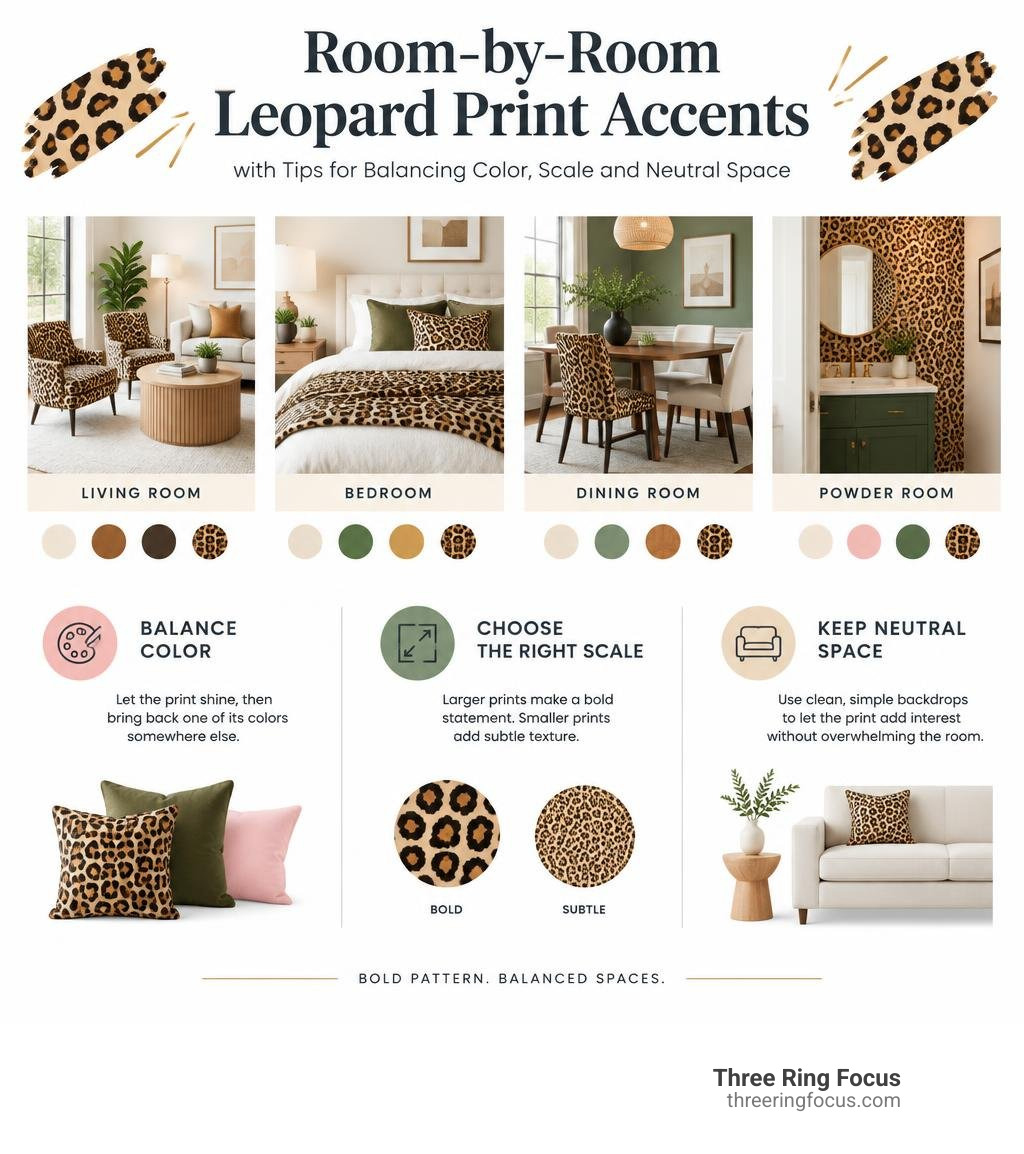
Use leopard print as an accent, not the whole room. Try a patterned chair or pillows in a living room, a duvet in a bedroom, or wallpaper on one powder room wall. Warm brown spots feel at home with cream and wood. Mint, pink, or neon works best in smaller doses against a quiet backdrop.
The trick is balance: give the print room to stand out, then repeat one of its colors elsewhere to tie the space together.
I’m Luke Wherry, Marketing Director at Three Ring Focus. For more than 17 years, I’ve helped businesses bring visual ideas together across websites, branding, and print; that same focus on a clear, consistent look guides these leopard print design ideas.
Introduction
Animal prints have officially evolved from a seasonal novelty into a versatile design staple. In fact, the global animal print market is projected to expand at a compound annual growth rate (CAGR) of 5.2% through 2028, led largely by consumer enthusiasm in home décor and fashion textiles. Leopard print accounts for over 30% of all animal print textile designs sold on major fabric marketplaces, making it the single most sought-after motif in the category.
Surveys among leading fashion and textile designers show that 68% consider leopard print an enduring classic, with 42% routinely integrating it into new collections. However, successfully translating this dynamic pattern into an interior requires an eye for composition, texture, and visual breathing room. A well-placed print anchors a room, adding dimension without overpowering the surrounding architectural features.
Room-by-Room Inspirations for Modern Leopard Print Design
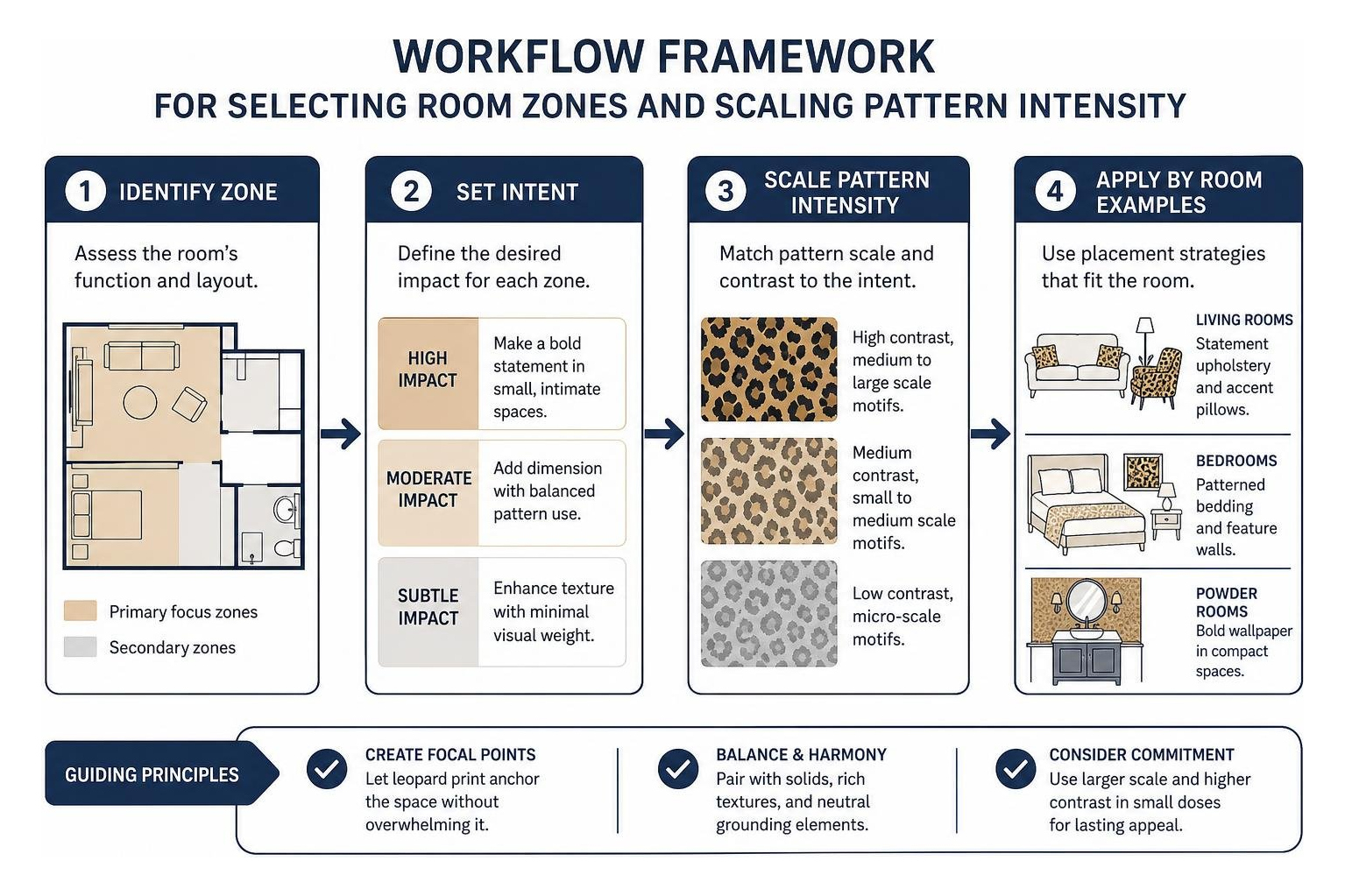
Bringing animal print into a residential or commercial setting works best when you establish clear focal points and honor the room’s natural layout. By zoning your spaces with intention, you can celebrate the playful boldness of leopard motifs while preserving an elevated, restful environment.
Living Rooms: Statement Upholstery and Luxe Accent Pillows
In large living spaces, leopard print serves as an exceptional visual anchor. Rather than carpeting an entire room in spots, focus on individual statement pieces that invite the eye to rest. A tailored armchair upholstered in a high-rub-count chenille or linen-blend leopard print can bring immediate personality to a quiet seating arrangement.
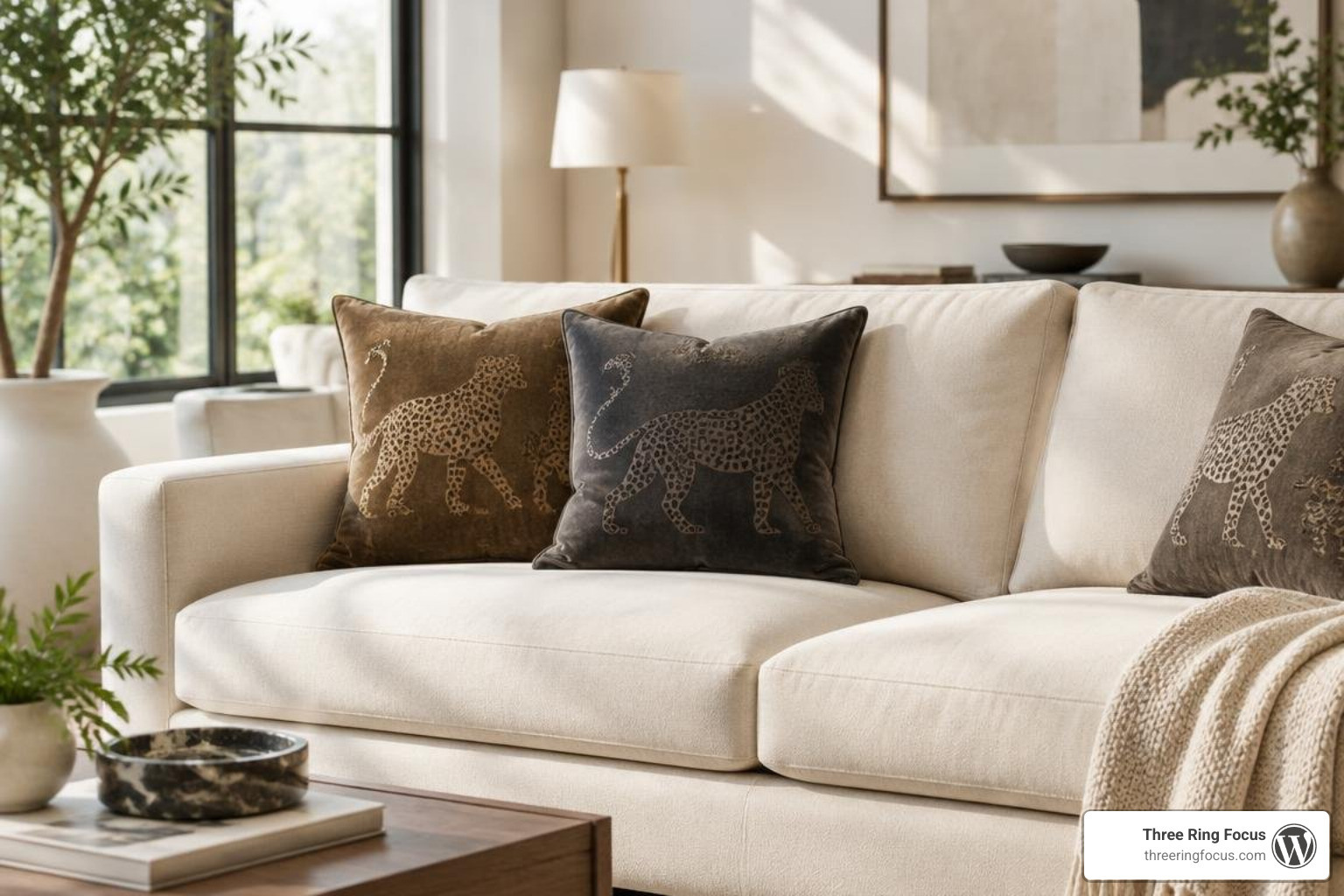
For a lower-commitment update, accent pillows are an effortless styling tool. Plush velvet leopard cushions resting on an oatmeal, camel, or charcoal sofa soften the pattern’s wild edge, giving it a sophisticated, tactile finish. To keep the look cohesive:
- Pair leopard pillows with solid textiles in rich textures, such as bouclé, ribbed knit, or smooth top-grain leather.
- Select a low-contrast, tonal leopard print where the spots are charcoal on slate, or espresso on caramel, for a subdued look.
- Anchor the floor with an expansive, neutral wool area rug to ground the seating vignette.
When developing custom decorative cushions, sourcing high-grade graphic assets ensures that the finished product looks sharp and refined. Designers frequently rely on tileable pattern assets for home decor accents to build crisp, repeatable patterns for upholstery, window treatments, and soft goods.
Bedrooms and Powder Rooms: Textured Wallpaper and Chic Bedding
Bedrooms and powder rooms invite bolder, more intimate design risks. Powder rooms, in particular, lack large pieces of furniture, making them ideal canvases for striking wallpaper choices. A feature wall covered in leopard wallpaper instantly turns a modest half-bath into an immersive jewel box.
- Powder Room Drama: Pair a dark-ground leopard print wallpaper with brushed brass sconces, a matte black vanity, and a beveled mirror to balance raw energy with clean lines.
- Modern Bedding: Introduce a duvet cover or quilted runner crafted from soft, breathable organic cotton. A micro-scale leopard pattern provides visual texture without disturbing the calm atmosphere needed in a sleeping area.
- Vibrant Feature Walls: For contemporary home offices or creative studios, vibrant neon leopard prints for wall art and decor can inject vibrant energy into an otherwise minimalist setup.
Color Palettes and Pattern Mixing for Modern Aesthetics
Leopard print is no longer confined to traditional tawny gold and black. Today’s palettes range from gentle pastels to dramatic hybrid botanicals, offering versatile options for diverse architectural aesthetics.
Pastel and Earthy Colorways in Contemporary Decor
Shifting away from high-contrast black-and-tan expands how leopard spots interact with contemporary architectural palettes. Muted, nature-inspired tones allow the pattern to settle gracefully into minimalist Scandinavian or warm organic interiors.
Soft blush, sage, and mint hues reframe leopard motifs as light and breezy elements rather than aggressive accents. Utilizing a pastel mint and pink animal print fabric on a nursery glider, a dining bench cushion, or custom café curtains brings a playful, cheerful mood to well-lit spaces. In contrast, warm terracotta, ochre, and deep olive grounds create a cozy, grounded feel that coordinates seamlessly with natural oak, walnut, and travertine finishes.
Blending Botanical Elements with Hybrid Leopard Print Design
One of the most exciting movements in surface design is the fusion of animal patterns with organic flora and alternative animal motifs. Combining leopard rosettes with tropical greenery or abstract striping creates an unexpected, layered look.
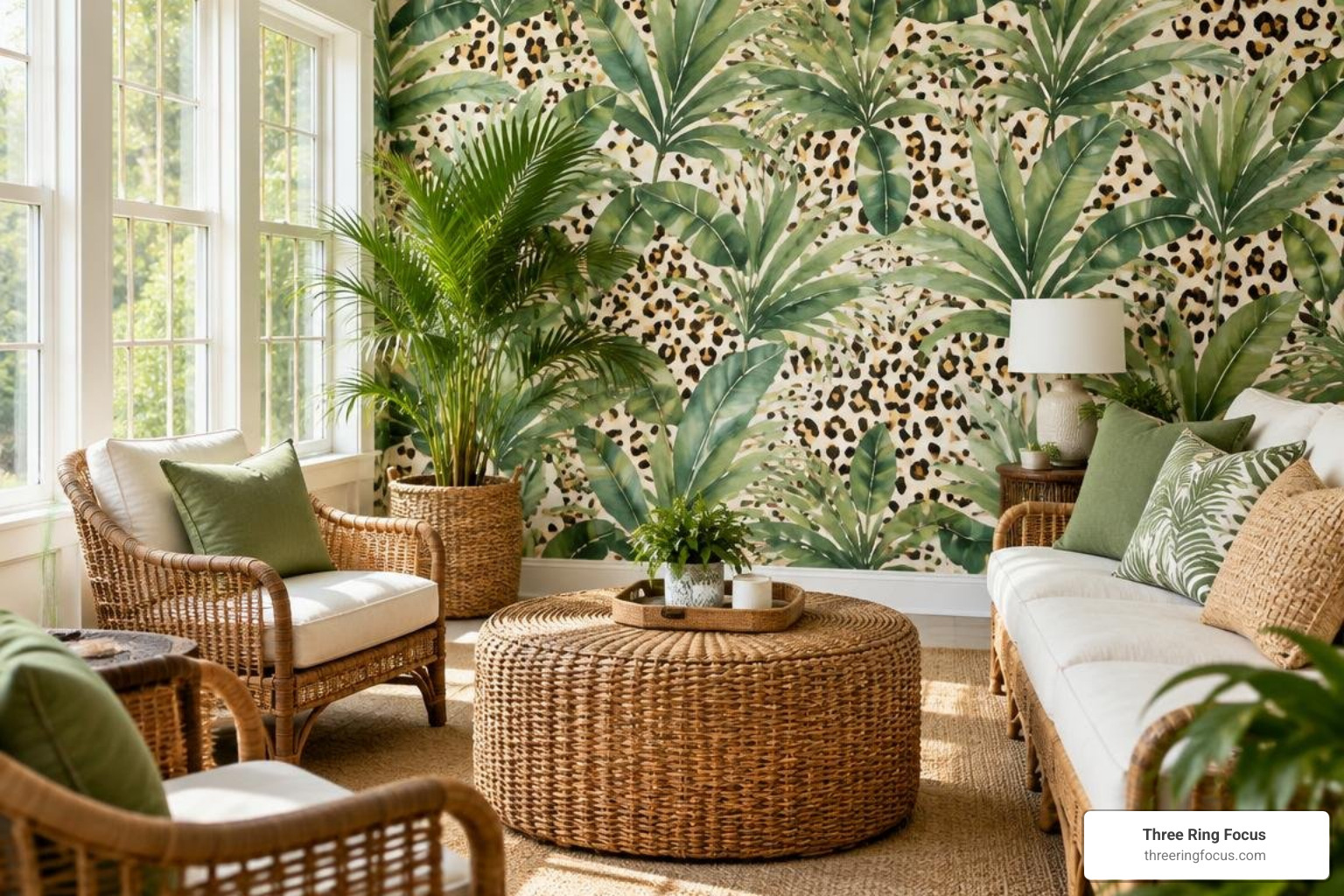
When styling mixed patterns:
- Layer with Botanicals: Intertwining palm fronds, banana leaves, or monstera foliage with leopard spots tempers the graphic boldness of the rosettes. Utilizing tropical watercolor leopard pattern motifs delivers an airy, resort-inspired elegance suitable for sunrooms, guest suites, or patio cabanas.
- Blend Animal Motifs: Combine distinct prints with care. Selecting warm earth tone abstract leopard and tiger fusion textiles offers an artisanal, hand-drawn look that feels intentional rather than cluttered.
- Vary Pattern Scale: If your hybrid wallpaper features an oversized botanical and leopard layout, pair it with solid furnishings or tight, micro-scale geometric accessories to prevent visual competition.
Fabric Selection and Technical Considerations for Physical Print
The physical substrate you choose directly determines how an animal print renders in a room. Color absorption, fiber sheen, and weave density all influence the final look and durability of your design.
Material Substrates: Cotton Shirting vs. Organic Interlock
Different textiles yield drastically different tactile and visual results when printed with detailed animal patterns. Selecting the right base material ensures your upholstery stays resilient and your drapery hangs beautifully.
| Fabric Substrate | Weight & Weave | Best Application | Visual & Tactile Characteristics |
|---|---|---|---|
| Organic Cotton Interlock | Medium-heavy knit; natural stretch | Throw blankets, nursery decor, soft loungewear | Ultra-soft hand feel, matte finish, rich ink penetration with soft edge definition |
| Cotton Shirting / Poplin | Lightweight plain weave; crisp structure | Accent pillow covers, tailored lampshades, light drapery | Crisp, high-definition spot detail, smooth surface, slight natural luster |
| Linen / Cotton Blend | Medium-weight textured weave | Upholstery, heavy drapery, dining seat covers | Natural slub texture, relaxed drape, muted and sophisticated color saturation |
| Heavy Velvet / Chenille | Dense cut-pile weave | Statement armchairs, high-traffic ottomans, luxury cushions | Deep tonal contrast, light-catching sheen, outstanding rub-count durability |
Pattern Repeat, Scale, and Seamless Tiling Specifications
Achieving a professional print run requires meticulous file preparation. Poorly aligned repeats or inadequate resolutions can quickly ruin an otherwise stunning textile project.
- Resolution Targets: Maintain a strict 300 DPI (dots per inch) standard at a 1:1 physical print scale for crisp consumer goods and fine upholstery. For large-format wallpapers viewed from a distance, 150 DPI is typically the functional minimum.
- Repeat Structures: A straight repeat can sometimes cause leopard spots to appear lined up in rigid columns across a wide sofa or wall. Employing a half-drop or brick repeat staggers the rosettes, producing a natural, flowing surface.
- Scale Awareness: Large, open rosettes (measuring 3 to 5 inches across) make a dramatic statement on expansive drapery panels or accent walls. Smaller micro-spots (under 1 inch) function almost like a solid texture, making them ideal for everyday seating and smaller accessories.
Digital Asset Creation, Licensing, and 3D Visualization
Before physical textiles are produced, modern interior and product designers rely on robust digital pipelines to iterate colorways, scale motifs, and build client presentations.
Digital Workflows and Software for Custom Leopard Print Design
Creating bespoke patterns requires vector precision and flexible raster control. Software applications like Adobe Illustrator, Adobe Photoshop, Procreate, and Figma streamline the pattern-making process:
- Rosette Construction: Sketch the irregular outer marks (the “brackets”) around a warm center fill in Adobe Illustrator to maintain infinitely scalable vector paths.
- Pattern Tile Assembly: Arrange the vector rosettes within a square artboard, using the Pattern Make tool to distribute elements evenly across the seams.
- Seamless Swatch Export: Export the repeat block as high-resolution PNG, TIFF, or Photoshop PAT patterns for rapid digital mockups and client presentations.
- Commercial Licensing: When sourcing pre-made digital assets from asset libraries, confirm whether the license covers physical reproduction limits, client handoffs, or end-product resale tiers.
3D Visualization and PBR Material Shading
To preview how leopard upholstery interacts with real-world light fixtures and spatial layouts, 3D visualization tools such as Blender, Unreal Engine, and Cinema 4D are invaluable.
Using photorealistic leopard print fabric PBR texture maps, artists can render realistic material responses:
- Albedo / Base Color Map: Delivers the primary pattern pigmentation and must be imported in an sRGB color space.
- Roughness Channel: Controls the light scatter across the fabric nap. Setting this channel to Non-Color data accurately reflects the difference between smooth velvet and matte woven cotton.
- Normal and Height Maps: Simulate the microscopic surface grain and threading of the textile without adding unnecessary polygon weight to the architectural model.
- UV Mapping and Tiling: Use a Mapping node to adjust scale coordinates, ensuring that the repeat size reflects realistic furniture dimensions without visible seam lines.
Frequently Asked Questions About Interior Animal Prints
Is leopard print considered a neutral in modern interior styling?
Yes, when executed in classic tawny, caramel, charcoal, or cream tones, leopard print functions as an earthy neutral. Because its natural palette mirrors materials like wood, leather, stone, and wool, it bridges contrasting colors and styles effortlessly. It adds organic visual texture without clashing against bolder solid statement hues.
How do I prevent animal print patterns from overwhelming a small space?
Follow the classic 60-30-10 interior rule. Dedicate 60% of the room to a dominant neutral base (such as wall paint and main flooring), 30% to secondary materials (wood furniture and main upholstery), and limit your animal print to the final 10% accent tier. Confining the pattern to items like an ottoman, throw pillows, framed art prints, or a single vanity feature wall ensures a balanced look.
What image resolution is required for printing custom leopard textiles?
For physical home decor fabrics, aim for an uncompressed file resolution of 300 DPI at full print dimensions. This maintains crisp, clear borders around every rosette. While 150 DPI can work for large-format wall murals viewed from several feet away, vector formats (AI, EPS, SVG) remain the gold standard because they scale cleanly to any size without pixelation.
Conclusion
Leopard print remains a beloved, dynamic design element because it balances classic sophistication with spirited personality. Whether you introduce a pair of tailored velvet cushions to a modern living room, hang a serene botanical hybrid wallpaper in a sunroom, or develop custom physical textiles for a commercial project, success lies in thoughtful scale, refined color harmony, and quality materials.
At Three Ring Focus, we believe that great design relies on consistent visual storytelling across both digital and physical mediums. From launching marketable, SEO-driven web platforms to crafting memorable print collateral, bringing creative visions to life with clarity and purpose is what we do best. Embracing the enduring appeal of tangible print design empowers you to transform everyday spaces into confident, stylish environments that stand the test of time.