What Are Full-Suite Brand Identity Design Services?
When people hear the word “branding,” they often picture a standalone graphic: the Apple silhouette, the Nike swoosh, or the golden arches. In practice, professional brand identity design services encompass a unified ecosystem of visual and verbal components engineered to communicate your business values instantly.
A full-suite identity is not a static piece of art. It is a living, modular design architecture that dictates how your business looks, sounds, and behaves across every touchpoint. According to the Brand management principles outlined by the American Marketing Association, a brand is more than a name or symbol; it is the cumulative experience customers associate with your organization. That is why a complete identity system must be built with the same rigor as any other operational asset.
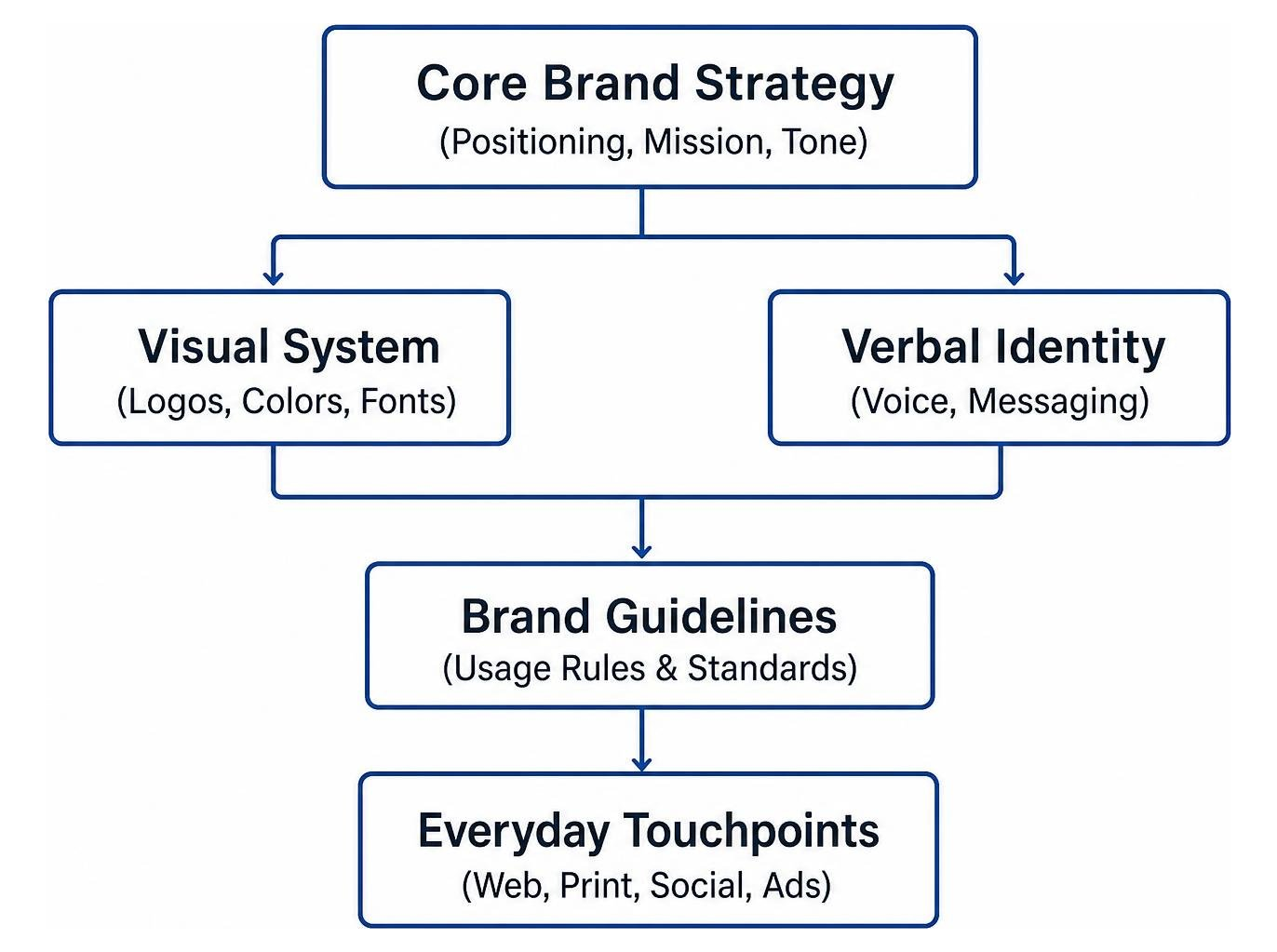
This ecosystem connects three core pillars:
- Visual Systems: The tangible graphics, shapes, colors, and layouts that customers see.
- Verbal Identity: The specific vocabulary, tone, personality, and messaging frameworks your business uses in conversation, copywriting, and advertising.
- Brand Guidelines: The instruction manual that keeps your internal team and external partners aligned, preventing mismatched fonts, distorted graphics, and inconsistent color codes.
Core Deliverables of Modern Brand Identity Design Services
A complete identity package provides your business with every asset necessary to launch campaigns, build websites, and print physical collateral without friction.
Here is what modern design packages typically include:
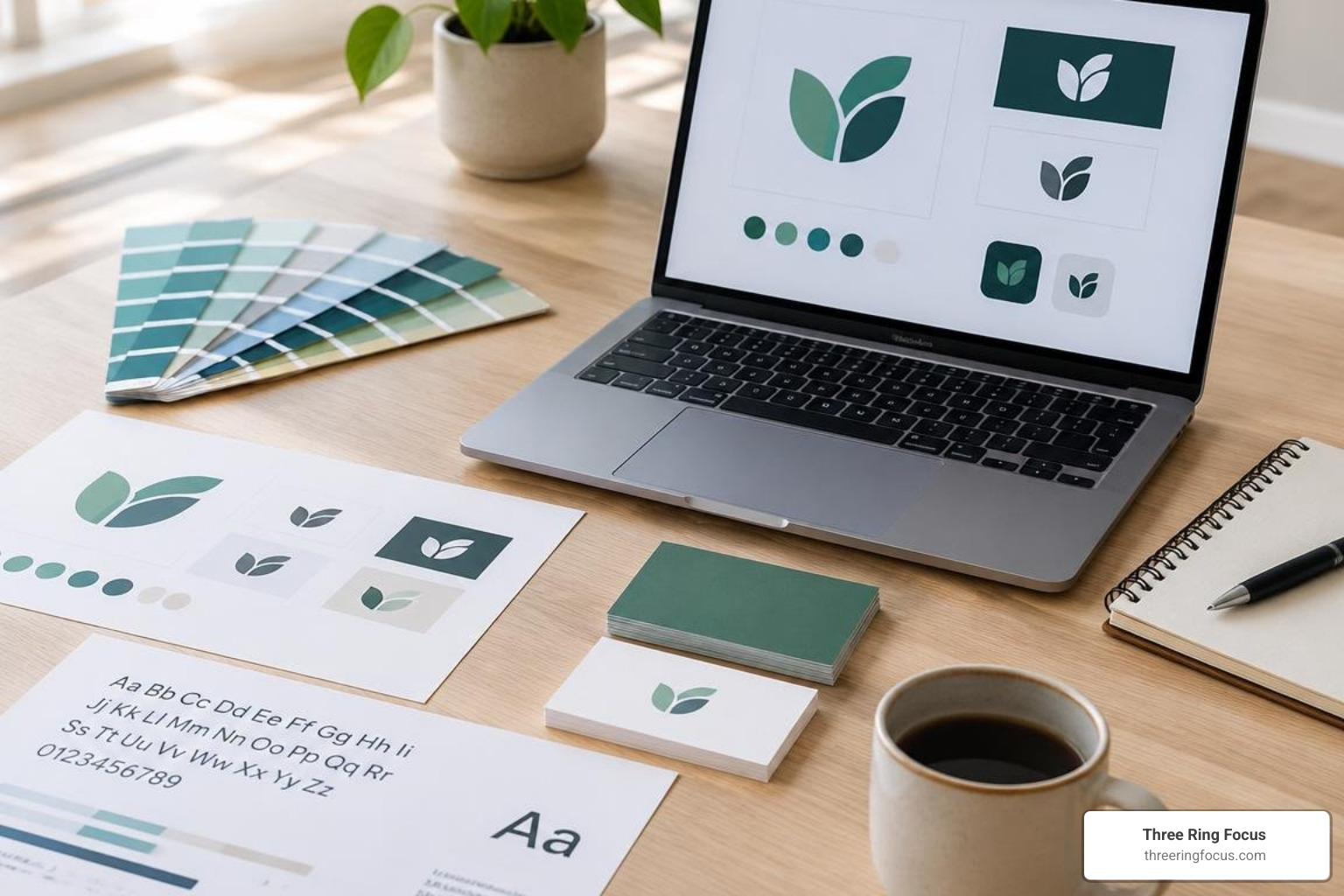
- Responsive Logo Suites: A single logo layout cannot fit every placement. Comprehensive services supply primary marks, stacked secondary marks, horizontal banners, and condensed icons or favicons suited for desktop headers, mobile navigation, and app icons.
- Color Palettes: Curated sets of primary, secondary, and accent colors defined across all digital and physical color profiles: HEX for web development, RGB for screen displays, CMYK for traditional print runs, and Pantone (PMS) spot colors for exact matching.
- Typography Hierarchies: Clear font pairings specifying distinct typefaces, weights, line heights, and letter spacing for headlines, subheaders, body paragraphs, and functional buttons.
- Collateral Templates: Practical templates for everyday business needs, including business cards, letterheads, invoice layouts, email signatures, presentation decks, and social media post frameworks.
- Comprehensive Style Guides: A centralized rulebook detailing minimum clear-space requirements around logos, correct background color pairings, sizing limitations, and explicit “what not to do” examples.
Brand Strategy vs. Visual Asset Production
There is a distinct difference between hiring a graphic designer to produce a visual graphic and partnering with an agency for strategic brand identity development. Visual asset production answers the question: “What looks good?” Brand strategy answers the question: “Why does this matter to the buyer?”
Without an underlying strategy, even aesthetically pleasing graphics fail to drive business growth. Strategy defines your target audience personas, maps your competitive landscape, and crystallizes your unique value proposition before a single sketch is drawn. It ensures that when your visual assets launch, they attract qualified leads rather than simply decorating a page. This strategic foundation is what separates a memorable market presence from a collection of interchangeable design elements.
The Multi-Phase Brand Identity Development Process
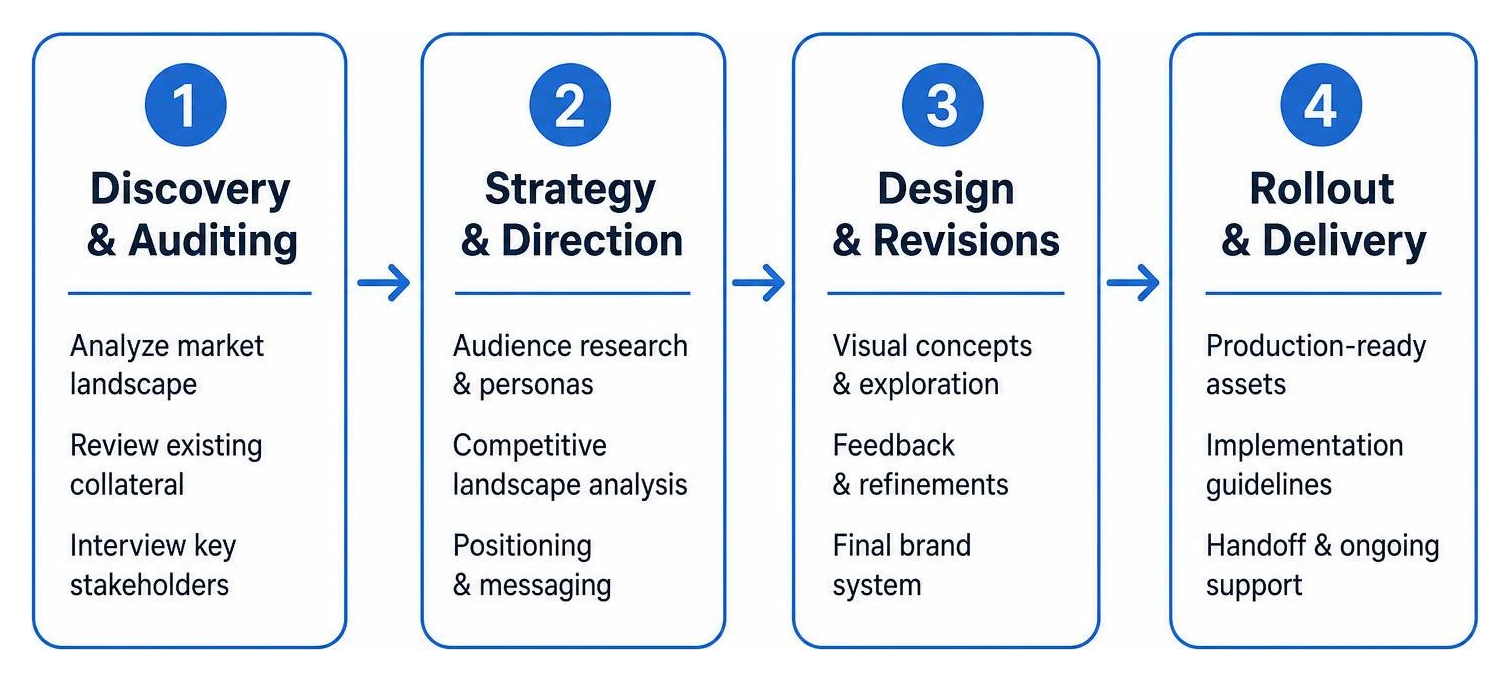
Building an enduring brand requires a disciplined, repeatable methodology. Working with seasoned professionals follows a structured, multi-phase journey designed to eliminate guesswork, incorporate feedback, and deliver production-ready assets.
Discovery, Audience Research, and Positioning
The design process begins with investigative discovery. During this initial phase, we analyze the current market landscape, review existing marketing collateral, and interview key stakeholders.
Key steps during discovery include:
- Competitor Audits: Evaluating direct and indirect competitors to identify category conventions, visual trends, and visual gaps your business can occupy.
- Audience Mapping: Profiling the ideal customer profile (ICP), their visual expectations, pain points, and buying triggers.
- Perception Analysis: Assessing how your current brand is viewed in the market versus how you want to be positioned.
- Moodboards & Art Direction: Curating visual reference boards covering textures, photography styles, typography directions, and color moods to align on visual tone before opening design software.
Collaborative Design Execution and System Rollout
Once the strategic direction is locked in, the project moves into active design execution. This stage turns abstract concepts into concrete brand assets through tight, iterative feedback loops.
Design teams construct logo concepts, typography pairings, and layout systems in collaborative design software. Presenting these concepts within realistic mockups—such as storefront signage, responsive web templates, and mobile app screens—demonstrates how the identity performs in the real world.
After refining the concepts through focused revision cycles, the final assets are prepared. Deliverables include master vector source files (AI, EPS, SVG) alongside high-resolution raster files (PNG, JPG, WebP) and a complete implementation roadmap for your marketing team.
Key Business Benefits of Investing in Professional Brand Systems
Investing in an intentional brand identity yields measurable business advantages. In competitive sectors, visual consistency is a primary driver of customer trust, shorter sales cycles, and pricing power.
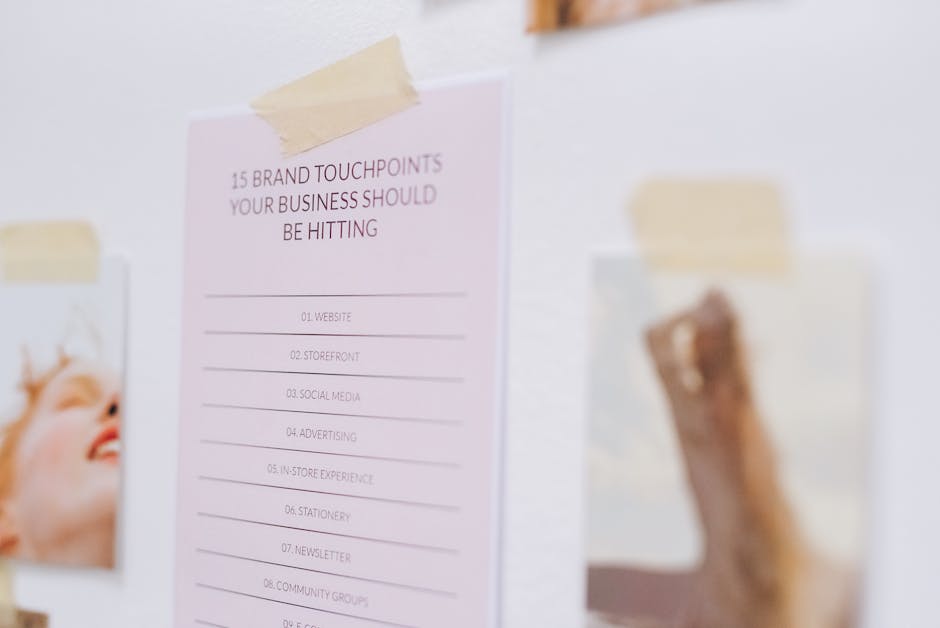
When your marketing touchpoints share a unified visual language, buyers perceive your organization as established, capable, and reliable. This elevated credibility makes it significantly easier to convert new prospects. If you are focused on mastering local business marketing to outperform competitors, presenting a cohesive, professional identity is essential to win market share from regional and national competitors.
Why Growing Companies Need Brand Identity Design Services
As a business scales, fragmented marketing becomes an operational bottleneck. Growing companies frequently experience brand drift: sales teams create their own slide decks, social media managers pick random stock templates, and web developers use mismatched button styles.
A comprehensive identity system solves these challenges by providing:
- Category Disruption: Breaking through industry clichés to establish a recognizable presence in crowded markets.
- Internal Alignment: Giving team members a shared set of rules and visual assets, eliminating confusion about brand standards.
- Marketing Agility: Accelerating campaign launches by giving designers and marketers modular, pre-approved assets.
- Scalable Consistency: Ensuring your brand remains recognizable whether appearing on a highway billboard, an Instagram ad, a proposal deck, or a company vehicle wrap.
Measuring Brand Impact: KPIs and Long-Term ROI
A brand identity is an operational asset that supports every revenue-generating campaign your business runs. The effectiveness of a brand identity can be measured through specific performance metrics:
- Conversion Rates: Tracking how many visitors complete a desired action after engaging with branded touchpoints.
- Brand Lift: Measuring changes in consumer awareness, recall, and perception following a rebrand or identity refresh.
- Organic Search Visibility: Monitoring branded search volume and click-through rates as recognition grows.
- Customer Acquisition Costs: Evaluating whether a stronger identity reduces the friction and spend required to win new customers.
- Customer Retention: Assessing whether consistent brand experiences encourage repeat purchases and long-term loyalty.
By monitoring these indicators, leadership teams can connect design investment directly to business outcomes rather than treating branding as an intangible expense.
Choosing the Right Design Partner for Your Business
Selecting a design partner is an important decision. Businesses often evaluate multiple options, from low-cost freelance marketplaces to specialized design agencies. Understanding how these models differ helps you choose the right partner for your project scope and budget.

When evaluating design partners, look for teams that combine design craft with technical execution. An identity system must function seamlessly in production—on fast-loading websites, in search engine result snippets, and across active advertising campaigns.
A strong agency partner should also provide clear commercial licensing terms, senior-level strategic input, and ongoing support after asset delivery. Freelance marketplaces may offer lower upfront costs, but they often lack the full-stack capabilities required to implement an identity across web, print, and digital advertising channels. Specialized agencies, by contrast, bring integrated strategy, design, and development expertise under one roof, reducing the coordination burden on your internal team.
When comparing potential partners, evaluate them across four key criteria:
| Selection Criteria | Freelance Marketplace | Specialized Design Agency |
|---|---|---|
| Strategic Depth | Limited to visual execution | Includes market research and positioning |
| Project Scope | Single asset or small package | Full-suite identity and rollout support |
| Asset Ownership | Varies by contract | Clear commercial licensing and source files |
| Ongoing Support | Typically ends at delivery | Implementation guidance and brand management |
Choosing a partner with the right balance of creative talent and technical capability ensures your identity system remains effective long after the initial launch.
Frequently Asked Questions About Brand Identity Design
What is the difference between a logo and a brand identity?
A logo is an individual graphic mark or typographic signature used to identify your company. A brand identity is the complete visual and verbal system that surrounds that mark. While a logo serves as the front door, the brand identity includes the architecture, interior design, tone of voice, color palette, typography, and rules that make the entire experience cohesive and memorable.
What does a complete brand identity package include?
A complete brand identity package typically delivers:
- A responsive logo suite (primary mark, secondary layout, icon, favicon, monochrome versions).
- A definitive color palette with digital and print color codes (HEX, RGB, CMYK, Pantone).
- A typography system specifying primary, secondary, and accent typefaces.
- Custom brand graphics, icon sets, or pattern libraries.
- Print and digital collateral templates (business cards, stationery, social banners).
- A comprehensive brand style guide detailing usage rules, spacing, and formatting standards.
How long does a full brand identity design project take?
Project timelines depend on project scope, organizational complexity, and revision rounds. A focused identity project for an emerging business typically takes between 3 to 6 weeks from initial discovery to final asset delivery. Complex enterprise overhauls involving extensive market research, multiple stakeholder reviews, and full website rollouts can span 8 to 12 weeks.
Building a Cohesive Foundation for Growth
A well-crafted visual identity turns first-time visitors into long-term customers by making your business immediately recognizable, credible, and trustworthy. When your visuals, messaging, and digital platforms work together, your marketing spend works harder across every channel.
At Three Ring Focus, we believe visual systems should be built to perform in the real world. We combine strategic design with custom web development, SEO, and omnichannel digital marketing to help local businesses establish a strong presence in their markets.
To see how adaptable visual assets function across modern platforms, explore our guide on the essential logo variations every brand needs to make sure your business is prepared for every screen and format.
A fully realized brand launch is not the end of the process; it is the beginning of a long-term relationship between your business and its audience. By maintaining consistency across every campaign, platform, and customer interaction, you build the kind of lasting brand equity that compounds with every impression, click, and conversion.